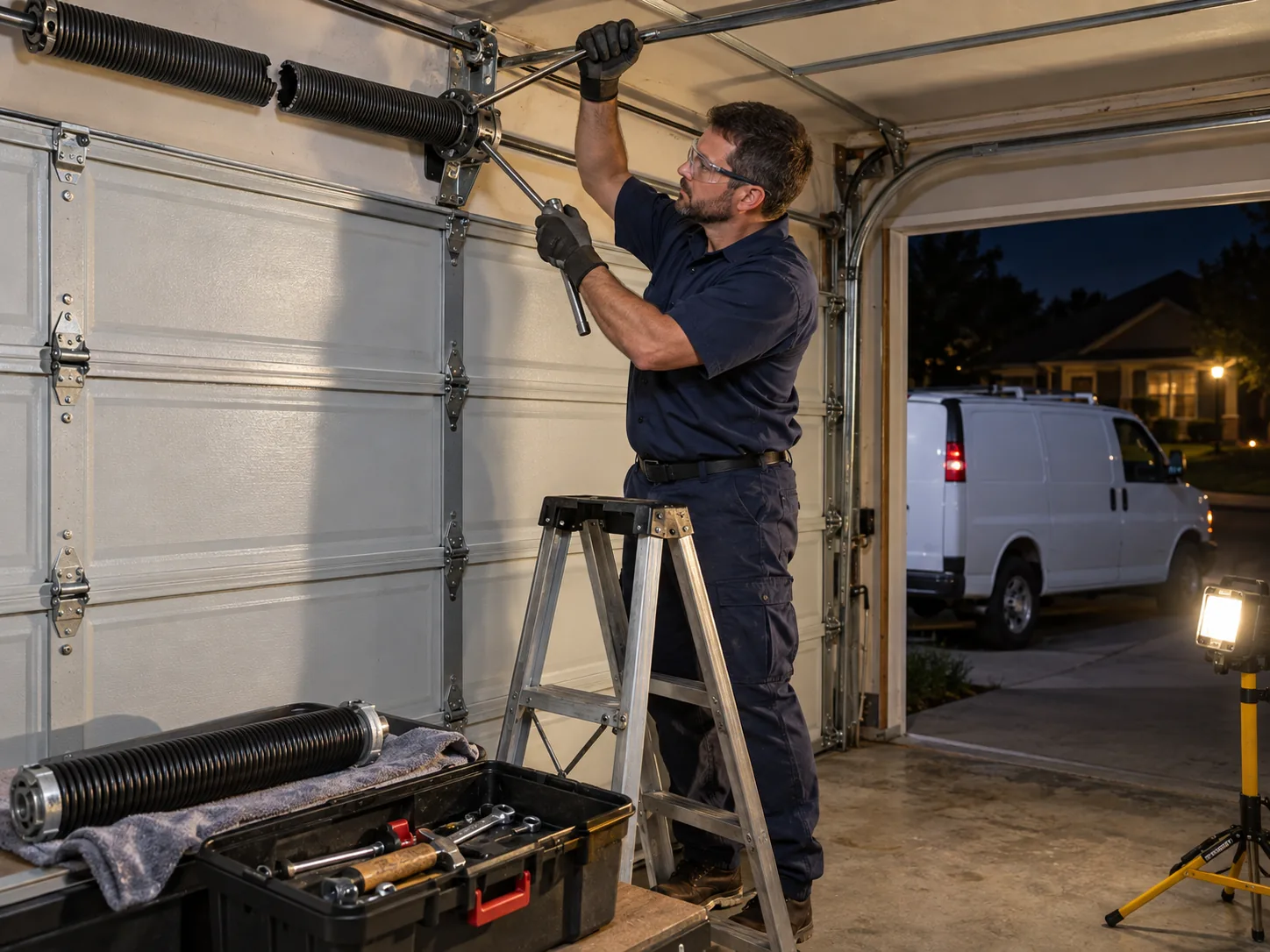
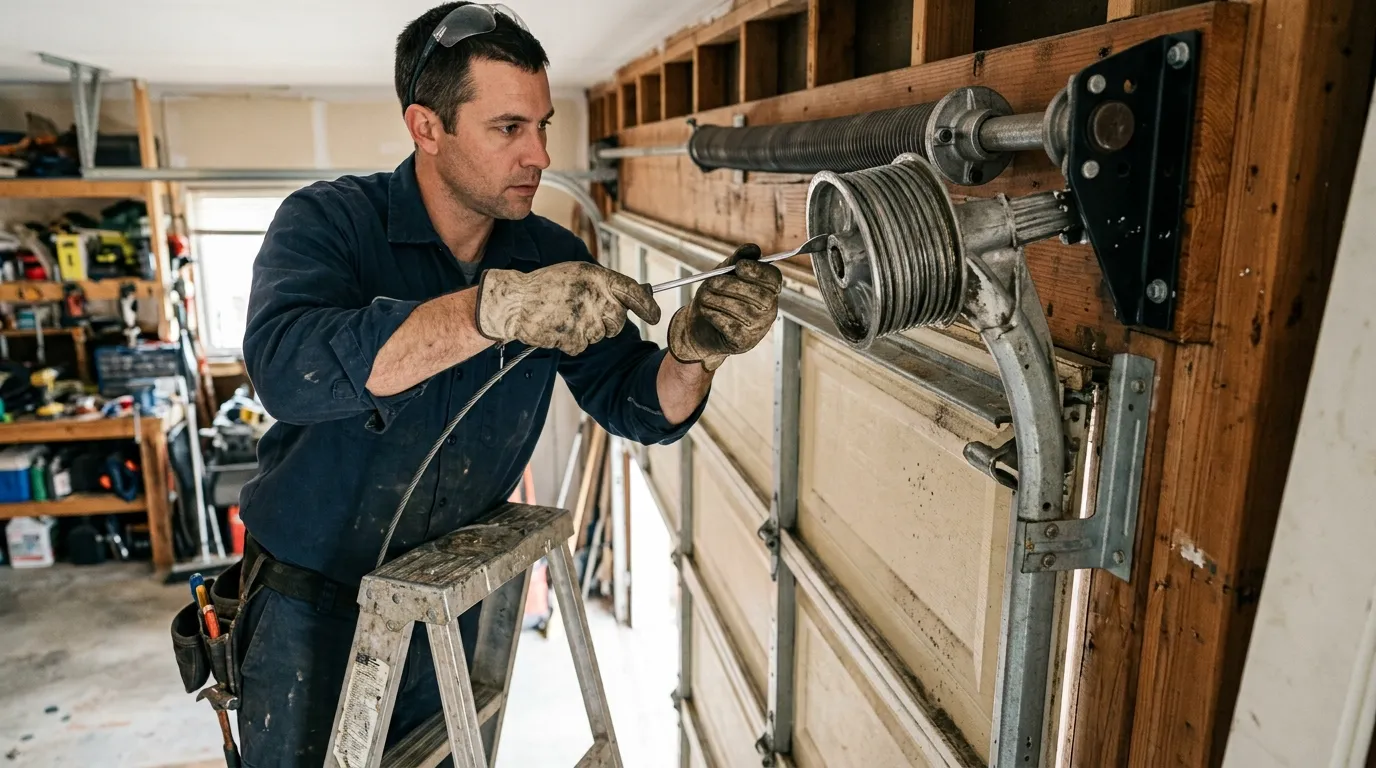
Most of the houses this company works on went up between 1980 and 2007, with the median build year landing around 1986. That matters because a door installed in 1986 is pushing forty years on its original torsion spring, and springs don't fail gently in a house that age - they let go all at once, usually on the hottest day of the year.
Across the eleven named areas this service covers, the housing stock is heavily 1980s and 90s construction, which means a lot of the same builder-grade hardware: steel torsion bars, standard-lift track, and openers that have already outlived their gears once or twice. That consistency is useful for us - we know what we're walking into before we open the truck - but it also means failures cluster. When one spring goes in a neighborhood built the same year by the same tract builder, others aren't far behind.
The climate band here is severe heat, and heat is hard on galvanized spring wire in a way cold climates don't experience the same way. Metal expands, lubricant cooks off the coils, and a spring that's been quietly losing tension for years finally snaps on a 105-degree afternoon when the door's been cycled twice as much because everyone's staying near the AC. Openers suffer too - capacitors and circuit boards don't love baking in an attached, unshaded garage for two decades.