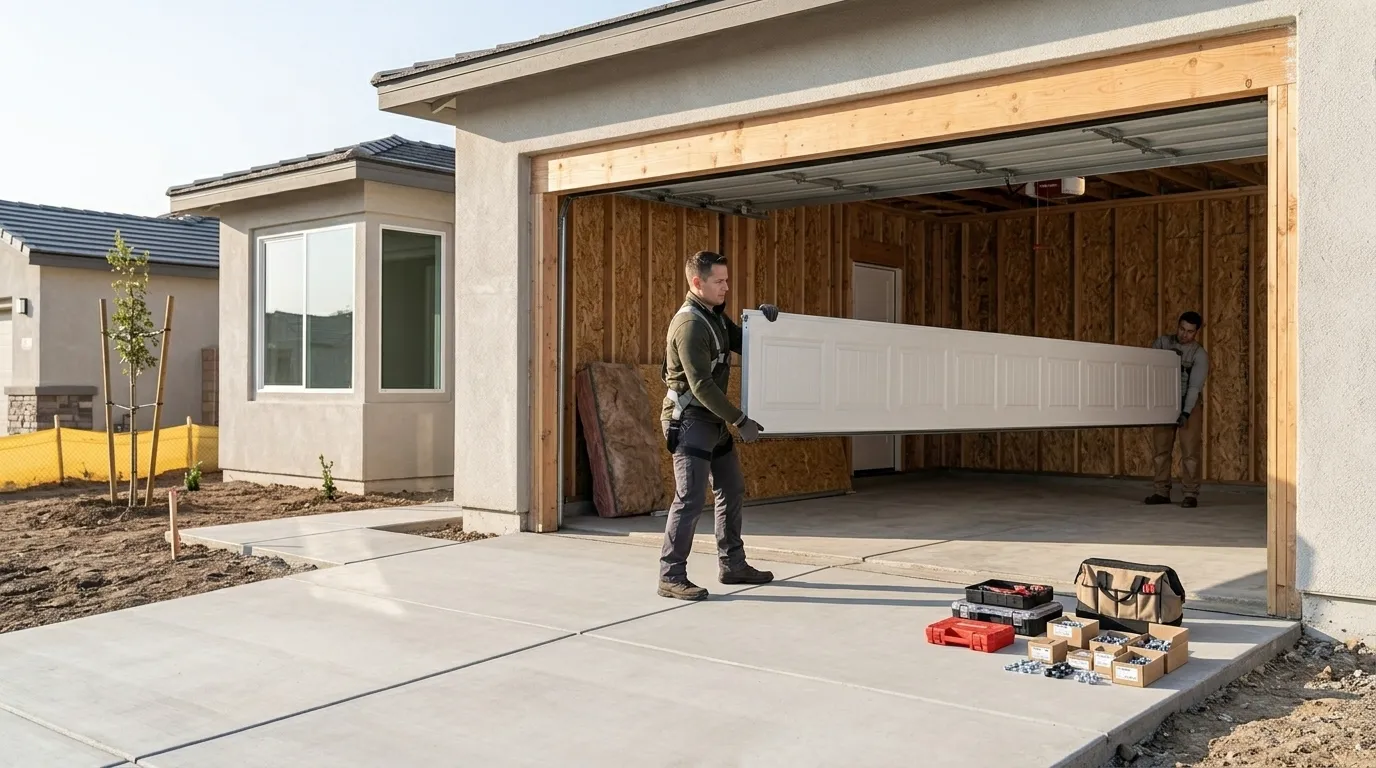
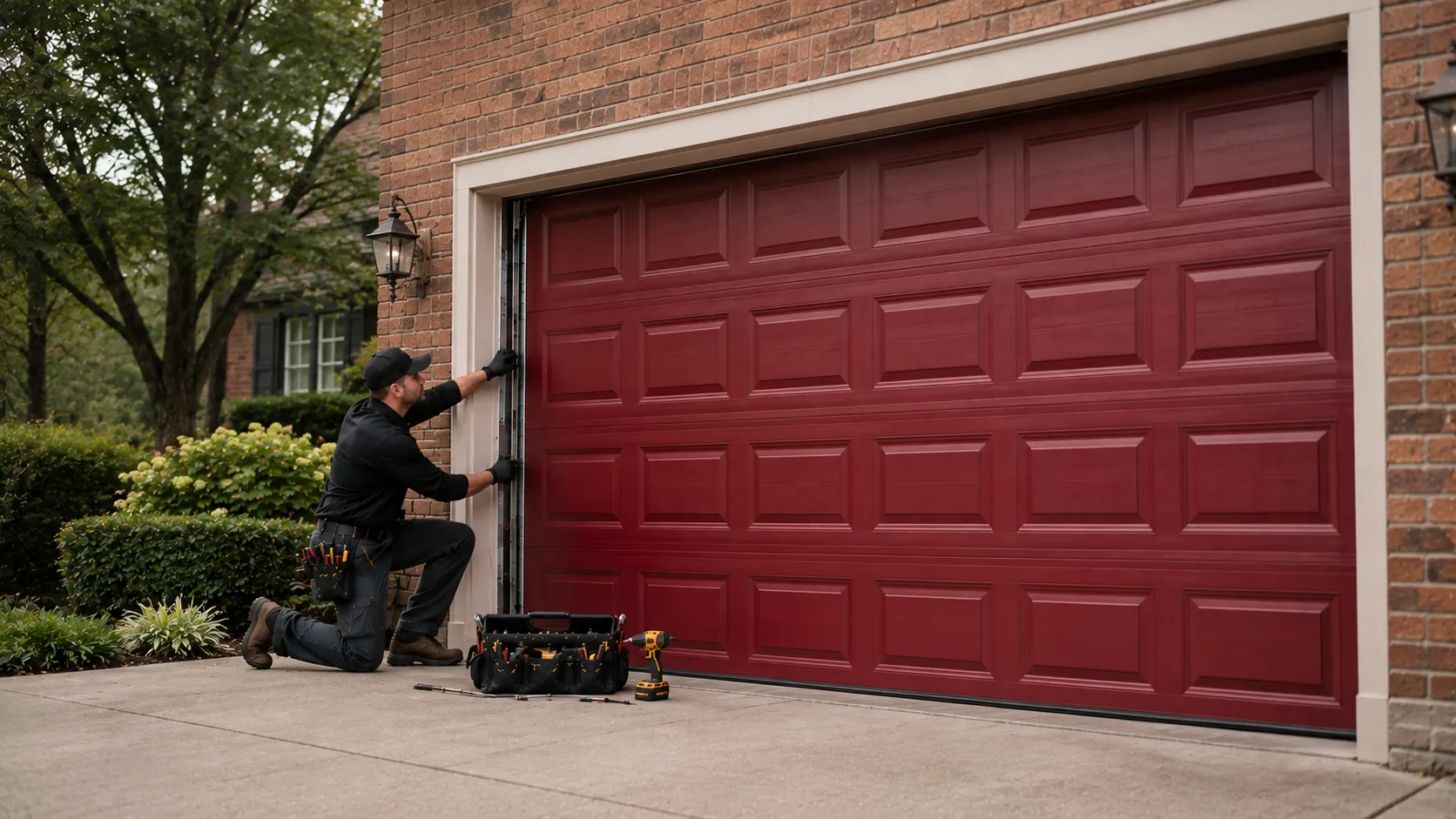
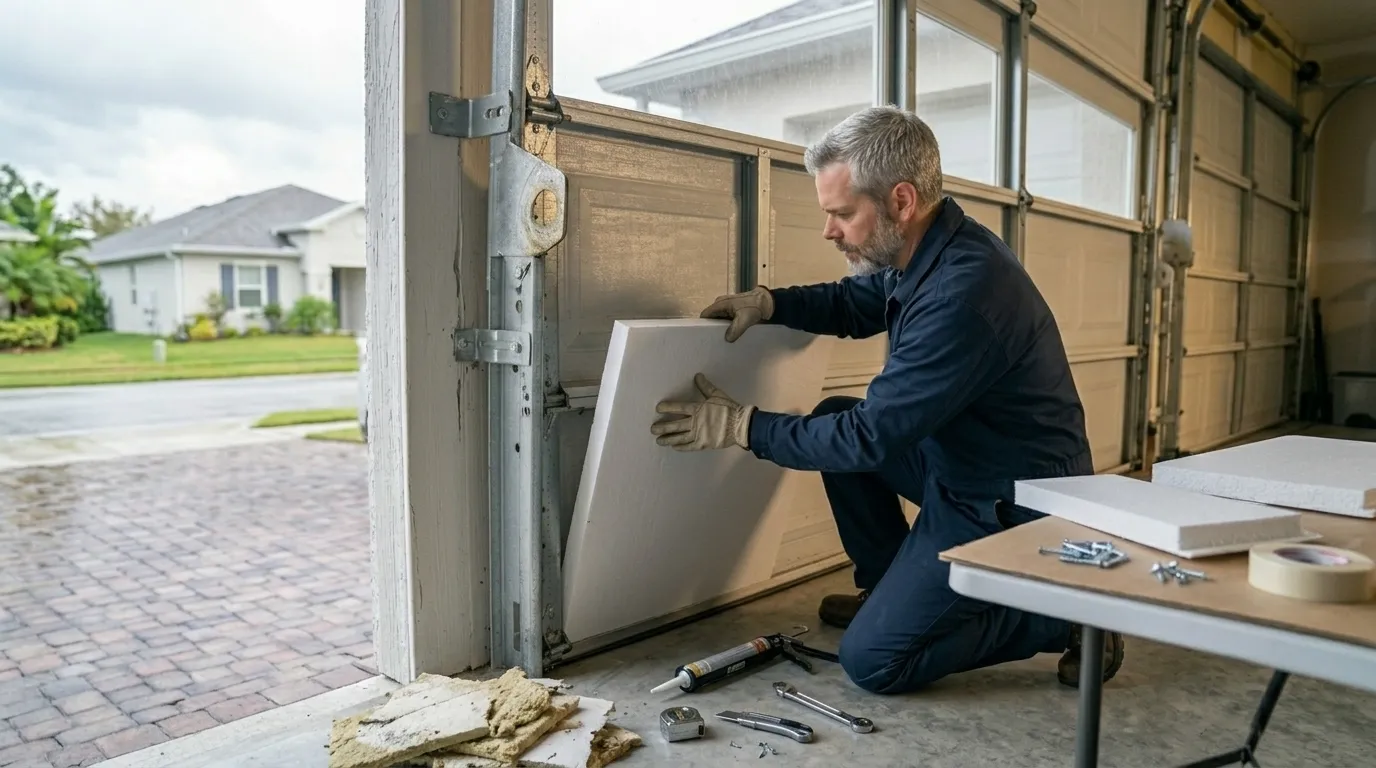
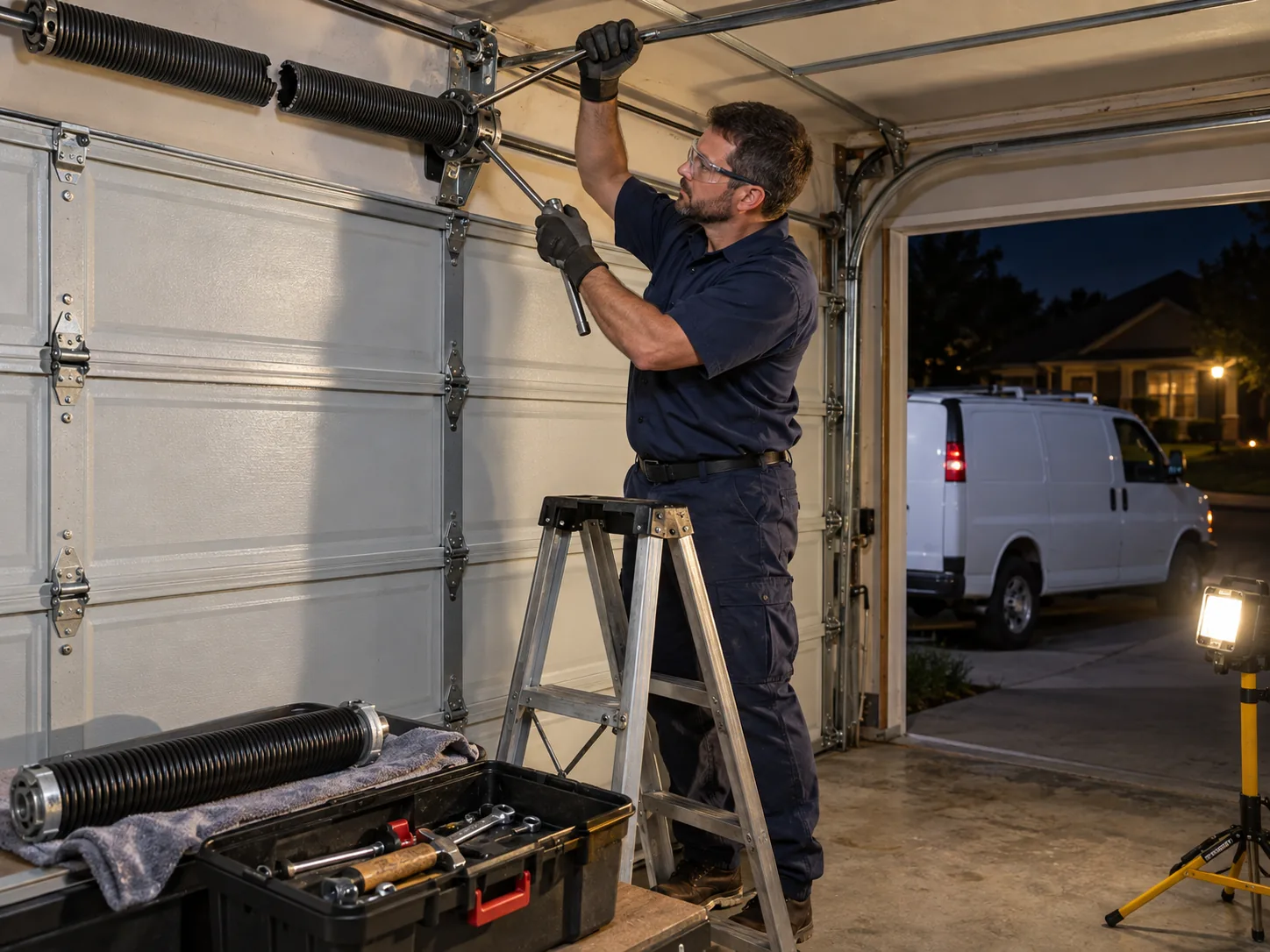
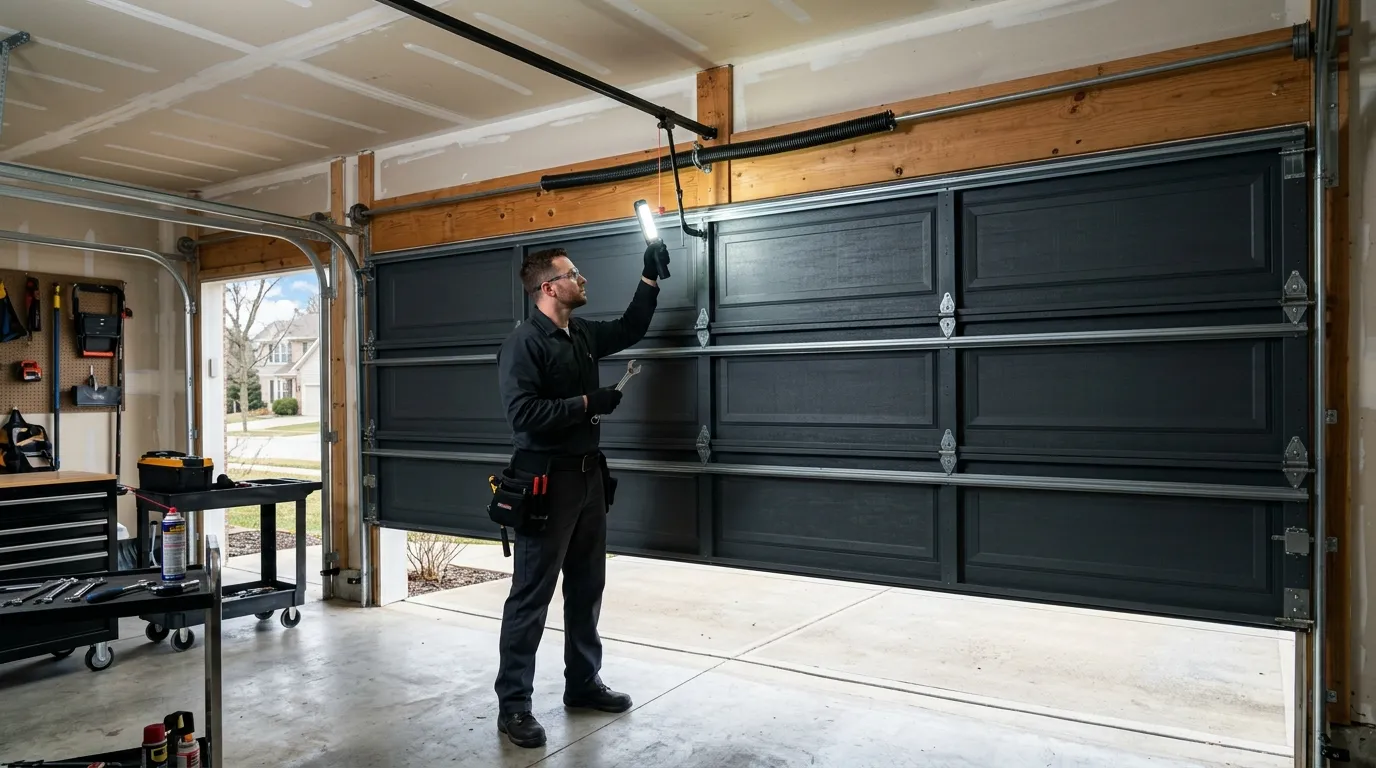
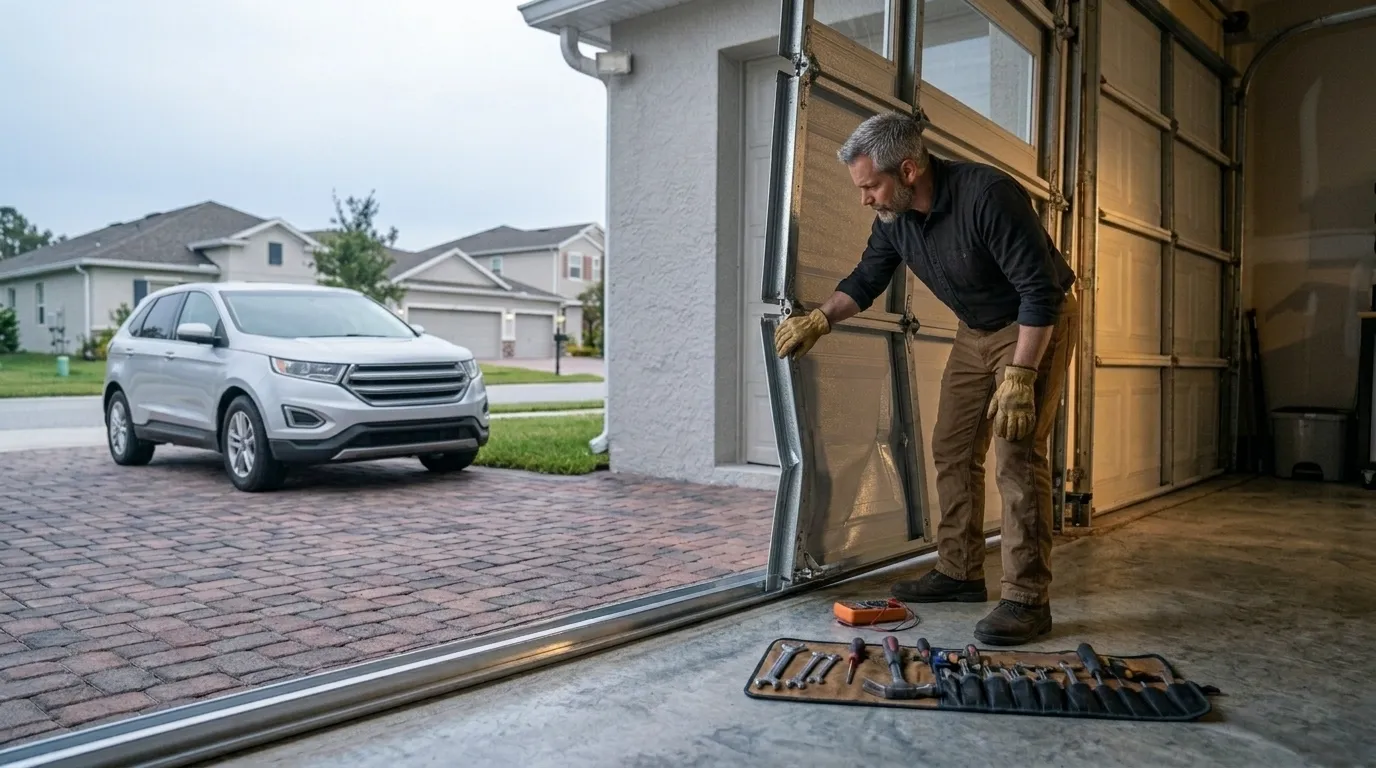
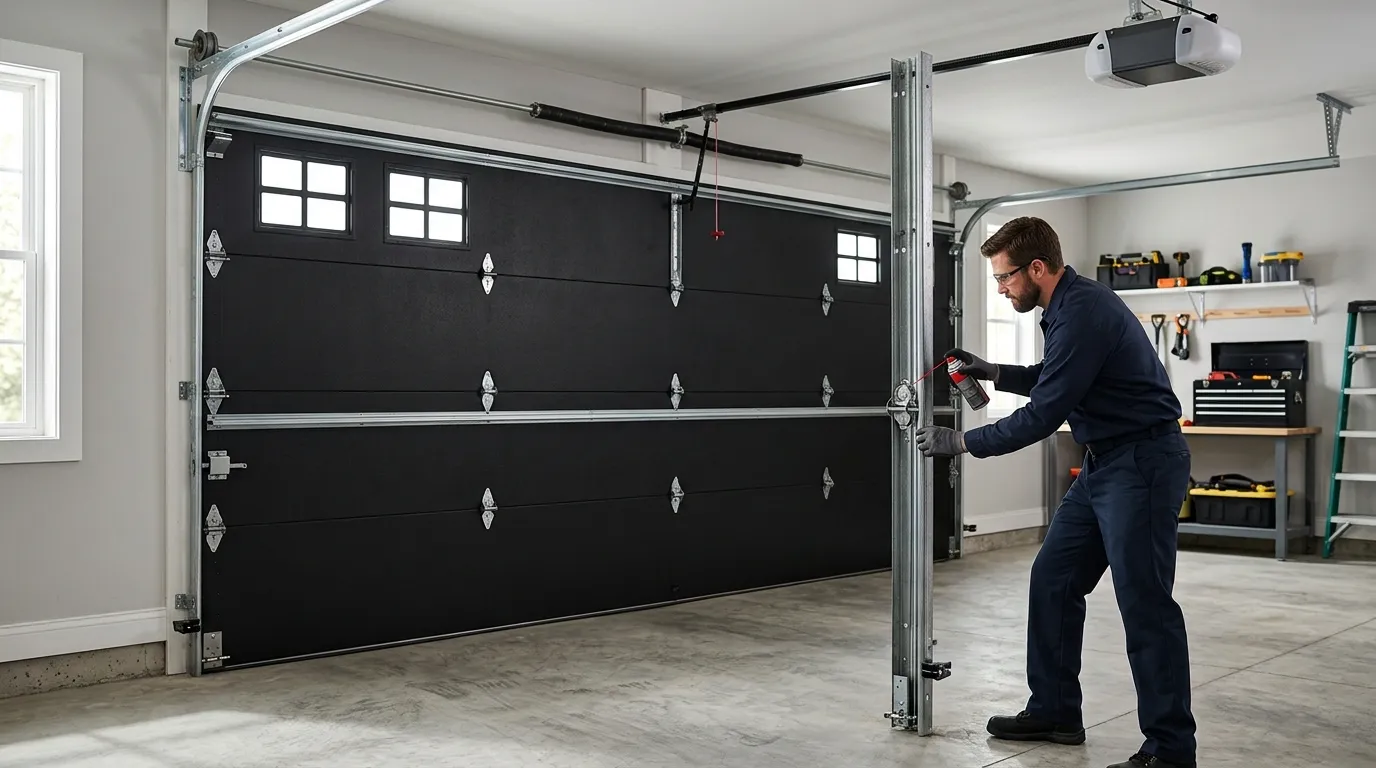
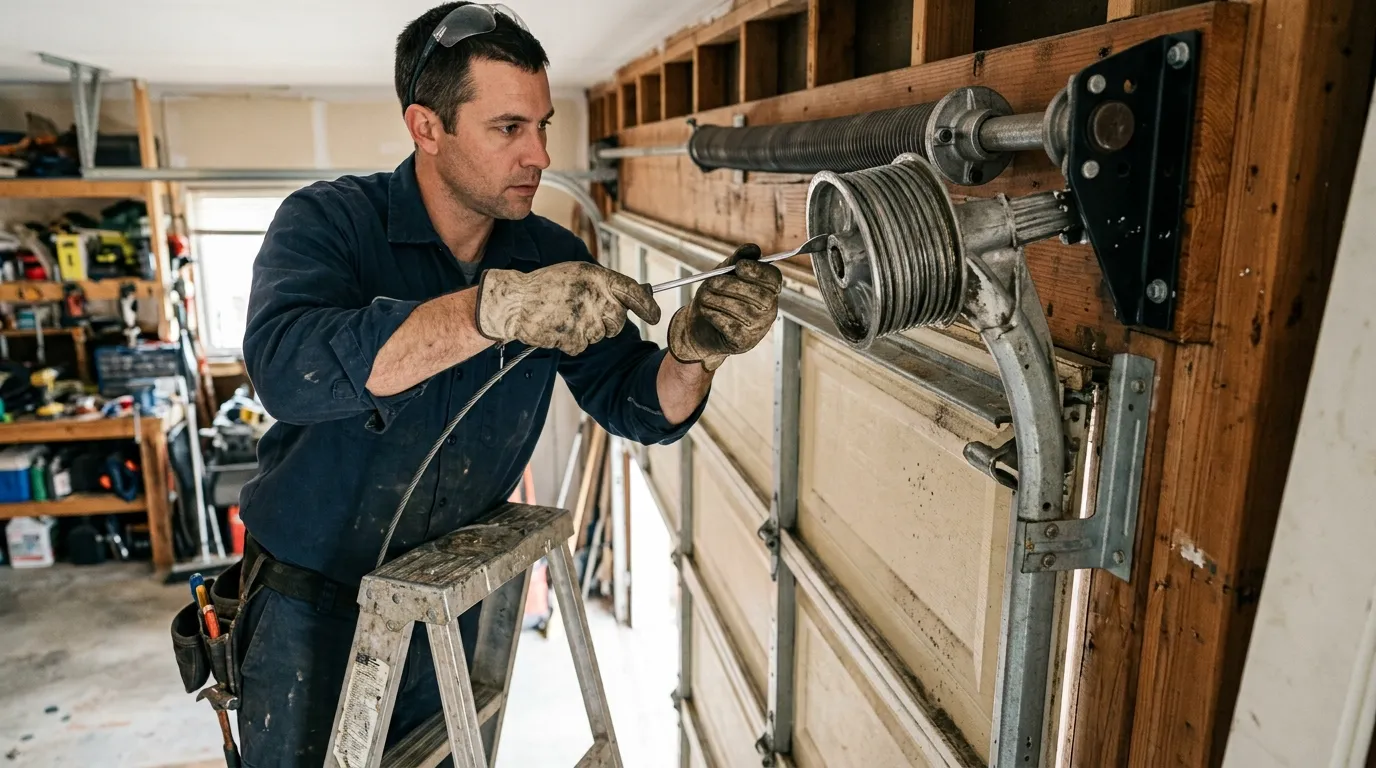
Most of the doors we're replacing here went in on houses built between 1980 and 2007, with the bulk of that stock dating to the mid-1980s. That's not a coincidence - it's when whole stretches of this city got built out, and it means a lot of garage doors on the road right now are original or close to it. In neighborhoods like Vail, Sahuarita, and Casas Adobes, that 1980s-90s stock means original steel doors with foam cores that have baked apart after three decades of Tucson summers. The foam separates from the steel skin, the panel goes soft in the middle, and the door starts racking in the track instead of running straight. Tucson's severe summer heat turns a slightly warped panel into a jammed track by August, because steel expands unevenly when one side of the door sits in full sun and the other doesn't. Add in original torsion springs that were never rated for today's heavier insulated replacement doors, and you get an opener straining against hardware it wasn't built to lift. None of this is a defect in any one door - it's what happens to a fixed piece of steel and foam left in a desert for thirty-plus years. New installation, done with the right spring weight and a door built for this climate, fixes the actual cause instead of patching the symptom again.