
Heat-loosening bolts
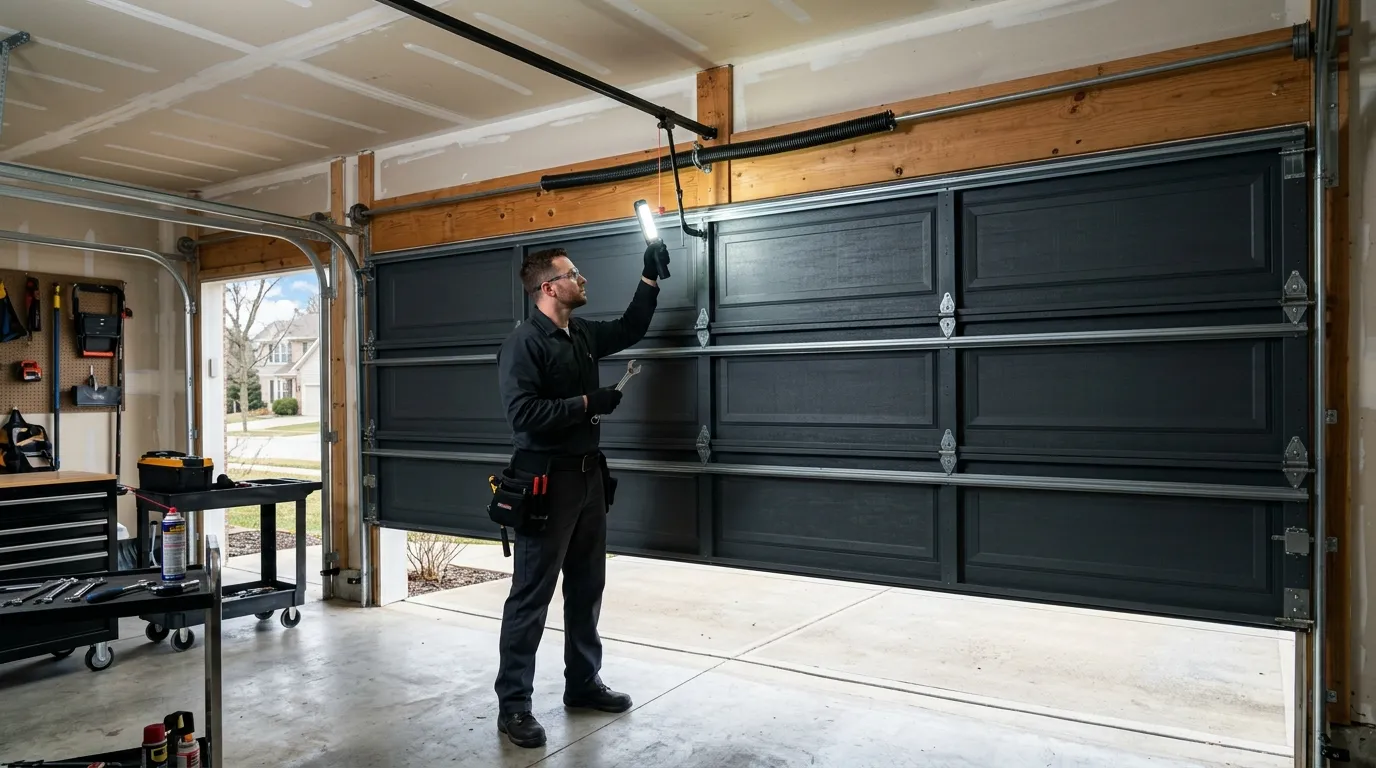
Check that the hinges and roller brackets are still snug; heat cycling loosens bolts over a summer, and a quarter-turn with a socket wrench catches it before it turns into a banging door.
Tucson, AZ
Tucson's 1980s-2000s housing stock and severe summer heat wear on springs, tracks, and openers fast. Here's what maintenance actually needs checking, and how long it takes.
Local causes
Most of the houses we work on across the Tucson area went up between 1980 and 2007, with the median build year sitting around 1986. That means a lot of doors, tracks, and openers are now well past the point where factory lubrication and original hardware tolerances still do their job. Across the eleven or so areas we cover - from Century Park and Los Reales close in, out to Vail, Sahuarita, and Casas Adobes on the edges of the service area - the housing stock runs the same age band, which means the same failure points show up on a predictable schedule.
Heat is the other half of it. Tucson sits in a severe heat climate band, and that changes maintenance math in ways cooler cities don't deal with. Steel expands and contracts every day through summer swings, which loosens fasteners on track brackets and hinges faster than a mild climate would. Nylon rollers and plastic idler bearings get brittle under sustained heat and start cracking instead of wearing evenly. Lubricant that would last a year somewhere temperate cooks off or gums up here in a season. None of this is dramatic - no single day breaks a door - but it adds up steadily on a 30-to-40-year-old system faster than most owners expect.
DIY or pro
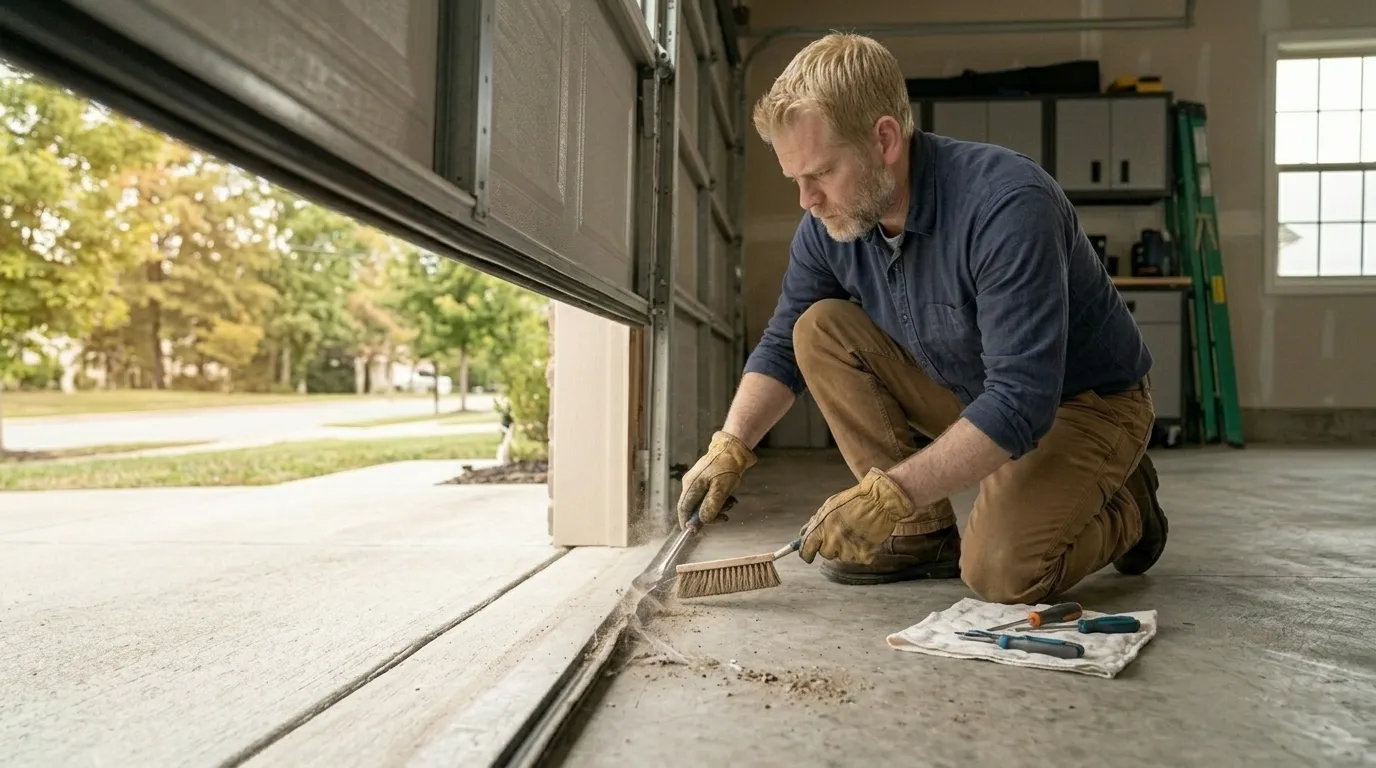
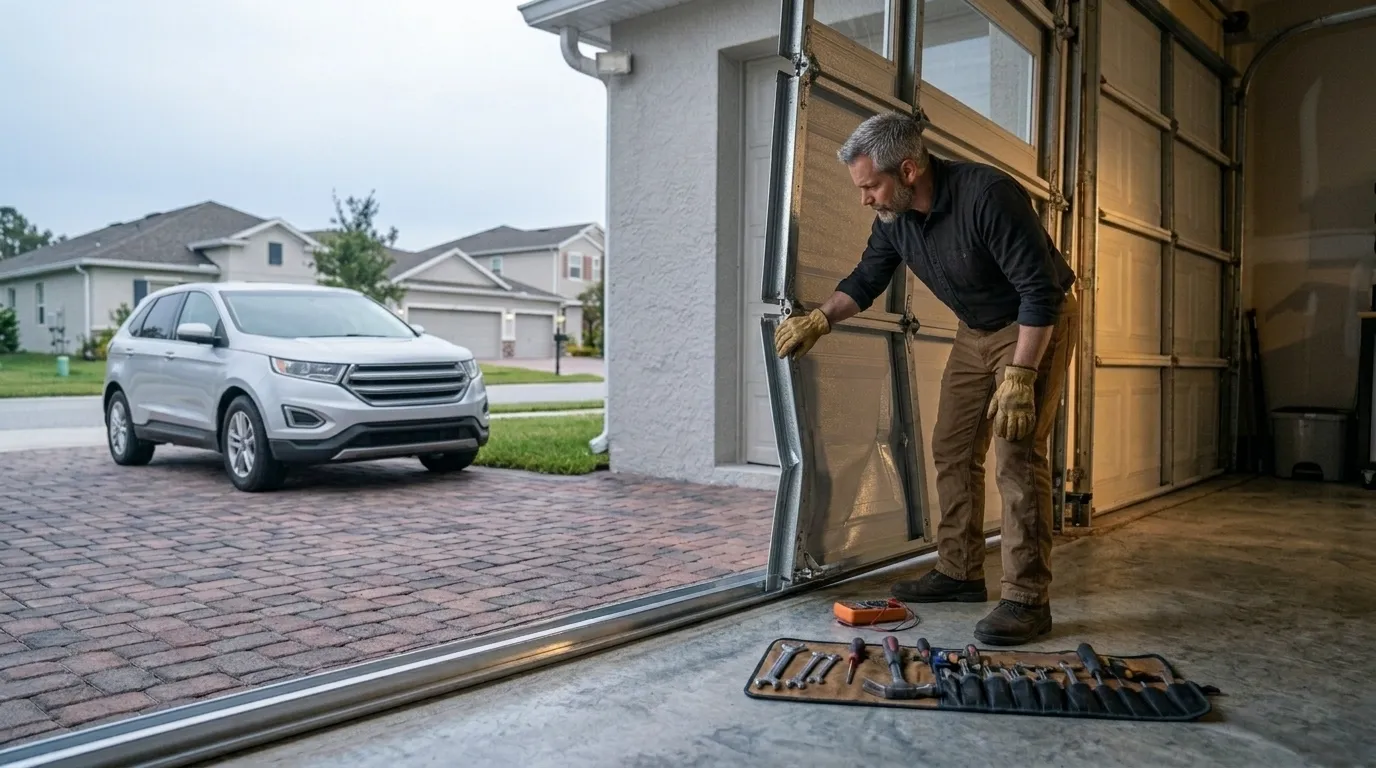
There's a fair amount you can check without calling anyone. Once a month, look at the tracks for dust buildup and wipe them down - Tucson dust is fine and gets into roller bearings faster than people think.
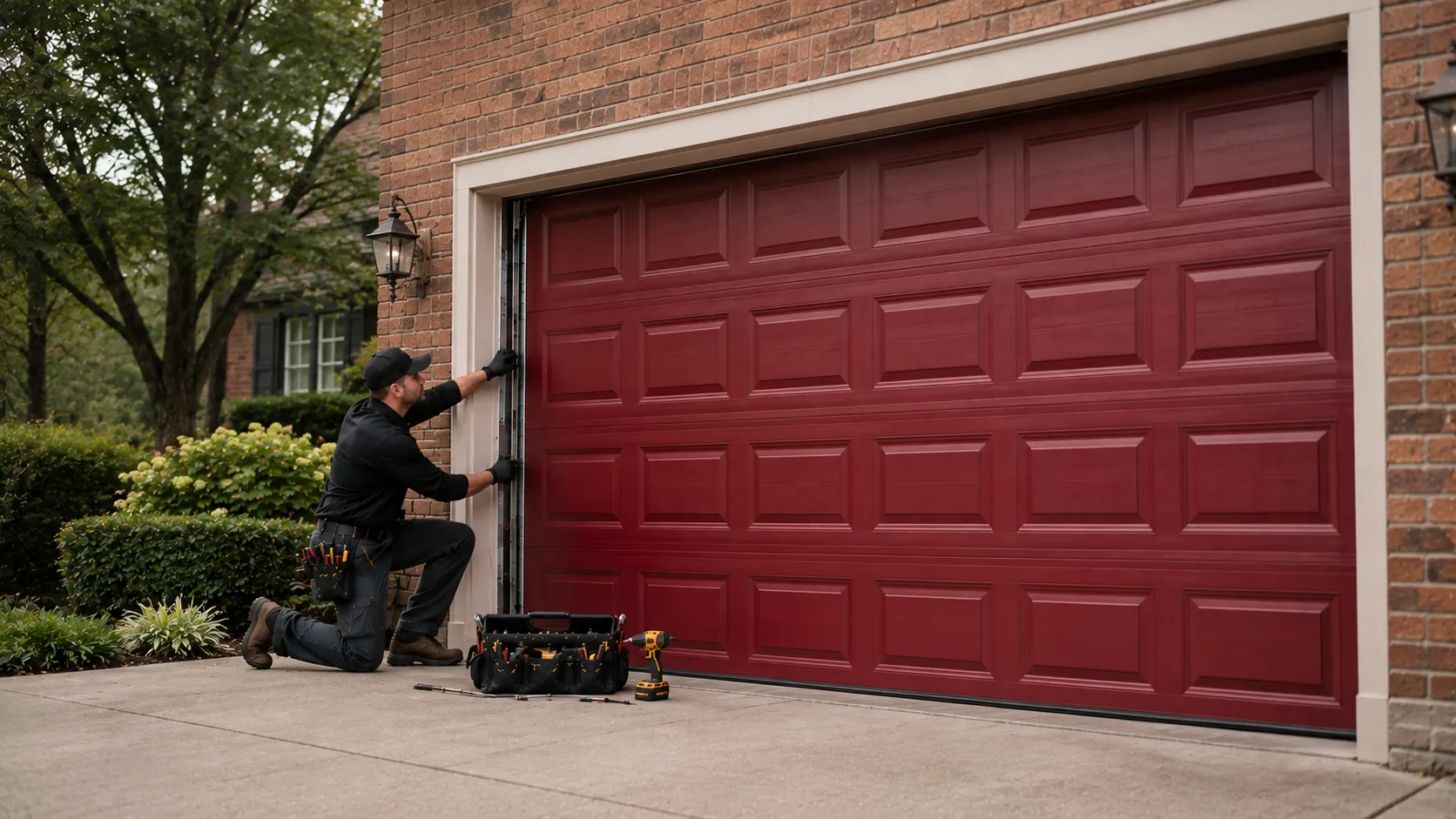
Check that the hinges and roller brackets are still snug; heat cycling loosens bolts over a summer, and a quarter-turn with a socket wrench catches it before it turns into a banging door.
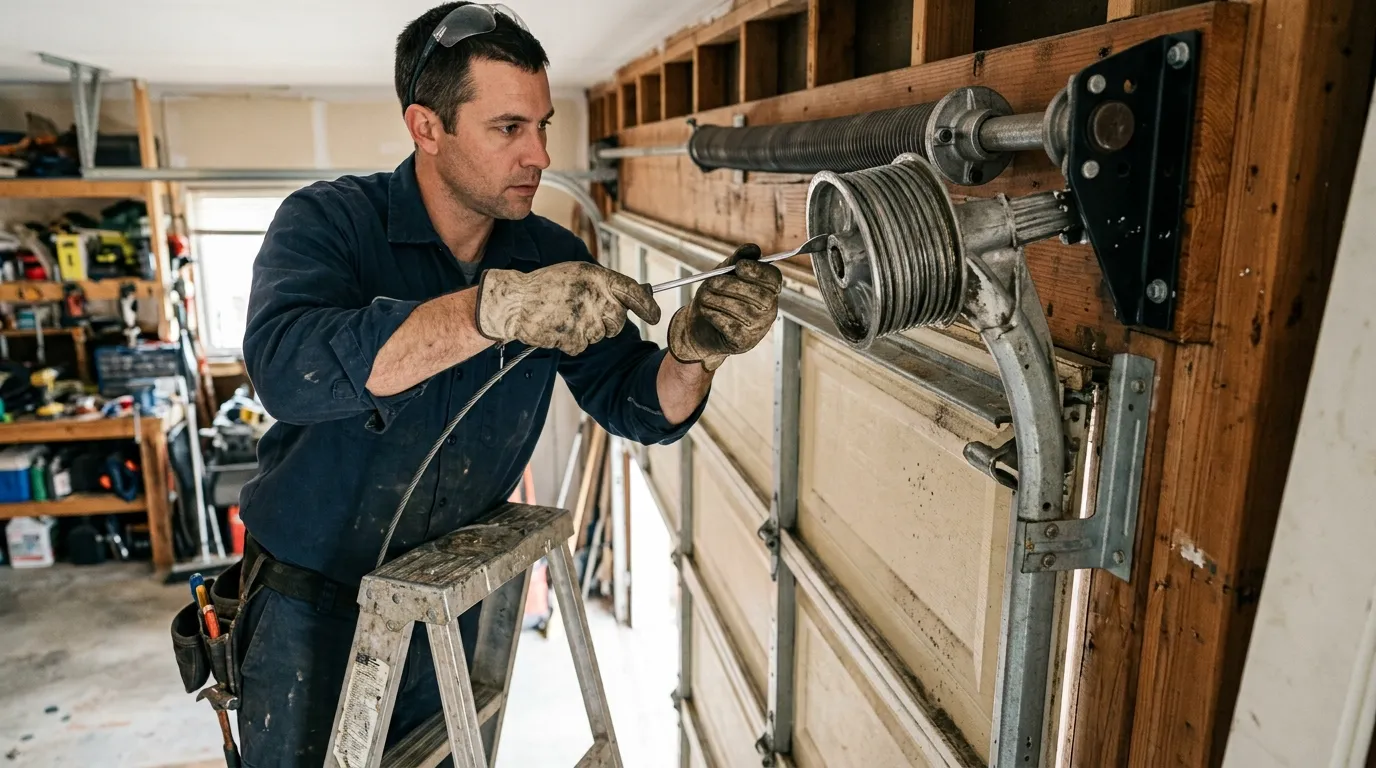
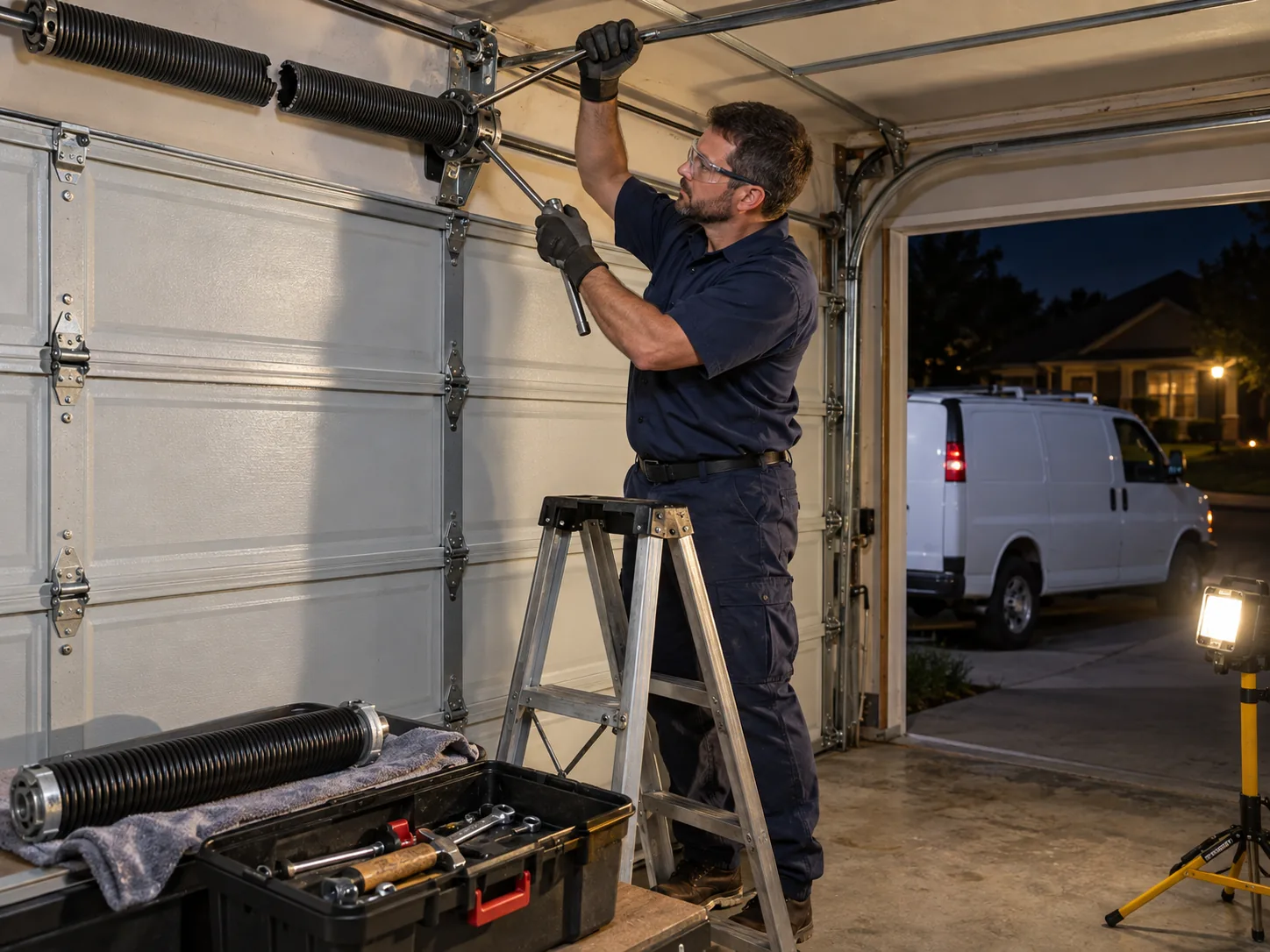
What you shouldn't touch yourself is the torsion spring. It's under enough tension to cause a serious injury, and on the 1980s-2000s doors common here, the spring size and winding cone often don't match anything on a hardware store shelf.
If a spring looks stretched, rusted, or has a visible gap in the coils, that's a call, not a DIY afternoon. Same goes for anything involving the opener's high-cycle gear - worth a look but not worth opening the housing yourself unless you know what you're doing.
Warning signs
The first sign is almost always noise - a grinding or squealing on the way up that wasn't there six months ago. That's usually rollers drying out from heat exposure, not a spring problem yet. After that, owners notice the door catching or hesitating partway through its travel, which points to a track that's shifted slightly out of alignment as brackets loosened.
On older openers common in this age of housing stock, you'll sometimes get a door that reverses without touching anything, or a remote that works inconsistently - heat-stressed wiring and worn limit switches are common culprits on units original to a 1986-median-year house. None of these show up overnight. They build over a season or two of heat cycling, which is exactly why a yearly check catches them while they're still a lube-and-tighten job instead of a parts replacement.
Timing
A standard maintenance visit - track cleaning, hardware tightening, roller and hinge inspection, spring tension check, opener safety test - runs about the length of a lunch break on most single doors. Two-car doors with heavier hardware take a bit longer, mostly because there's twice the roller and track length to go over.
If something turns up during the visit - a spring past its wear point, a section of track that needs replacing instead of adjusting - that's a separate conversation, because parts on some of the older opener models used across this area aren't always sitting on a shelf and can take a few days to source. We'll tell you on the spot if that's the case rather than leave you guessing.
Questions
Once a year is the baseline we recommend given the heat cycling here. If your door is original to a house built in the 1980s or 90s, which describes most of the stock across this area, once a year catches loosening hardware and drying rollers before they turn into a spring failure or a stuck door.
Heat dries out lubricant on rollers and hinges faster than it would in a milder climate, and Tucson's severe heat band means that happens every summer without fail. The squeal is usually just dry metal-on-metal contact, catchable with a lube-and-tighten visit before it wears a roller down.
Usually yes, if the motor and gear still run smoothly. Most failures on openers this old are limit switches or worn gears from heat stress, not the motor itself. We'll tell you honestly if a unit's worn past the point where maintenance makes more sense than replacement.
You can, but on houses built in the 1980-2007 window that make up most of this area, hardware loosens from heat cycling whether or not you notice symptoms yet. A door that seems fine today is often six months from the noise stage, which is the cheaper time to catch it.
Explore more
Ready when you are
Tucson Garage Door Pros repairs and installs garage doors, springs and openers in Tucson, AZ and the surrounding area.