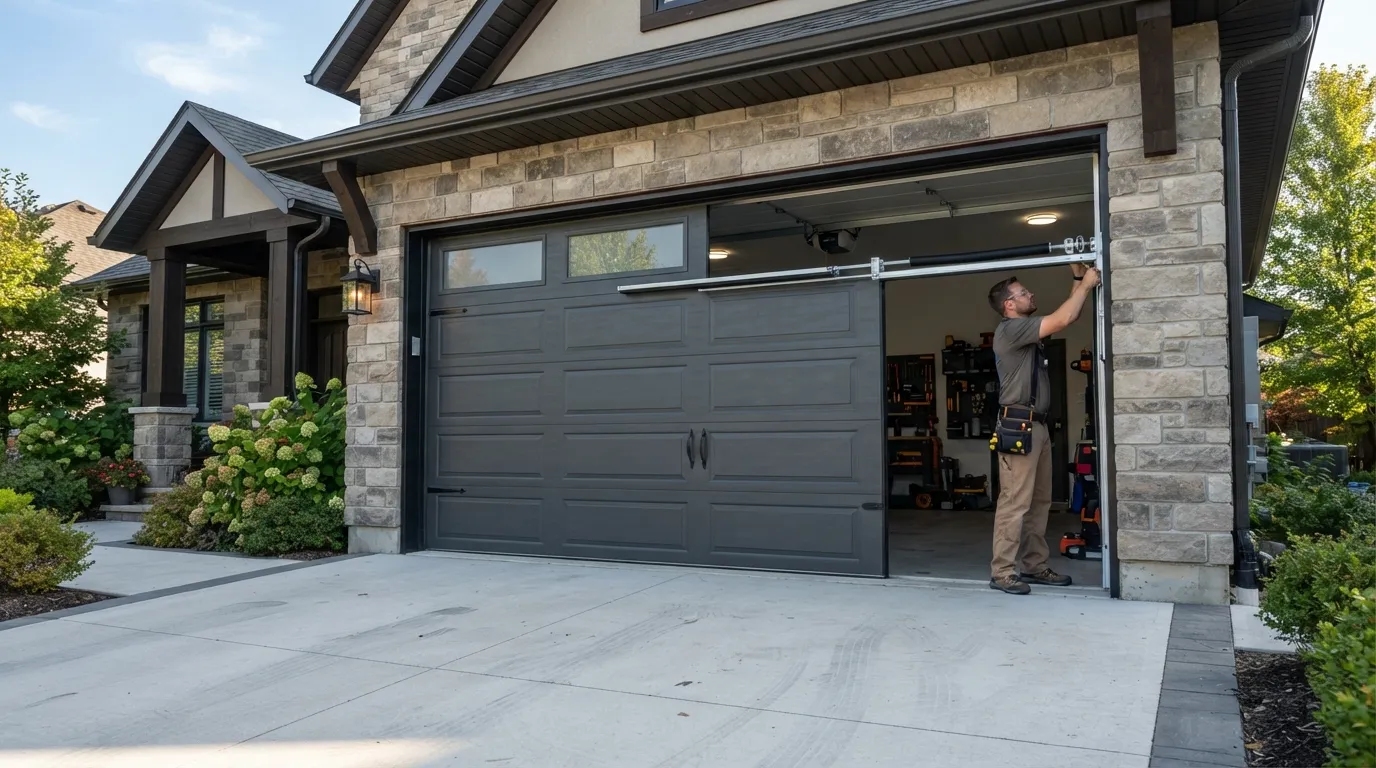
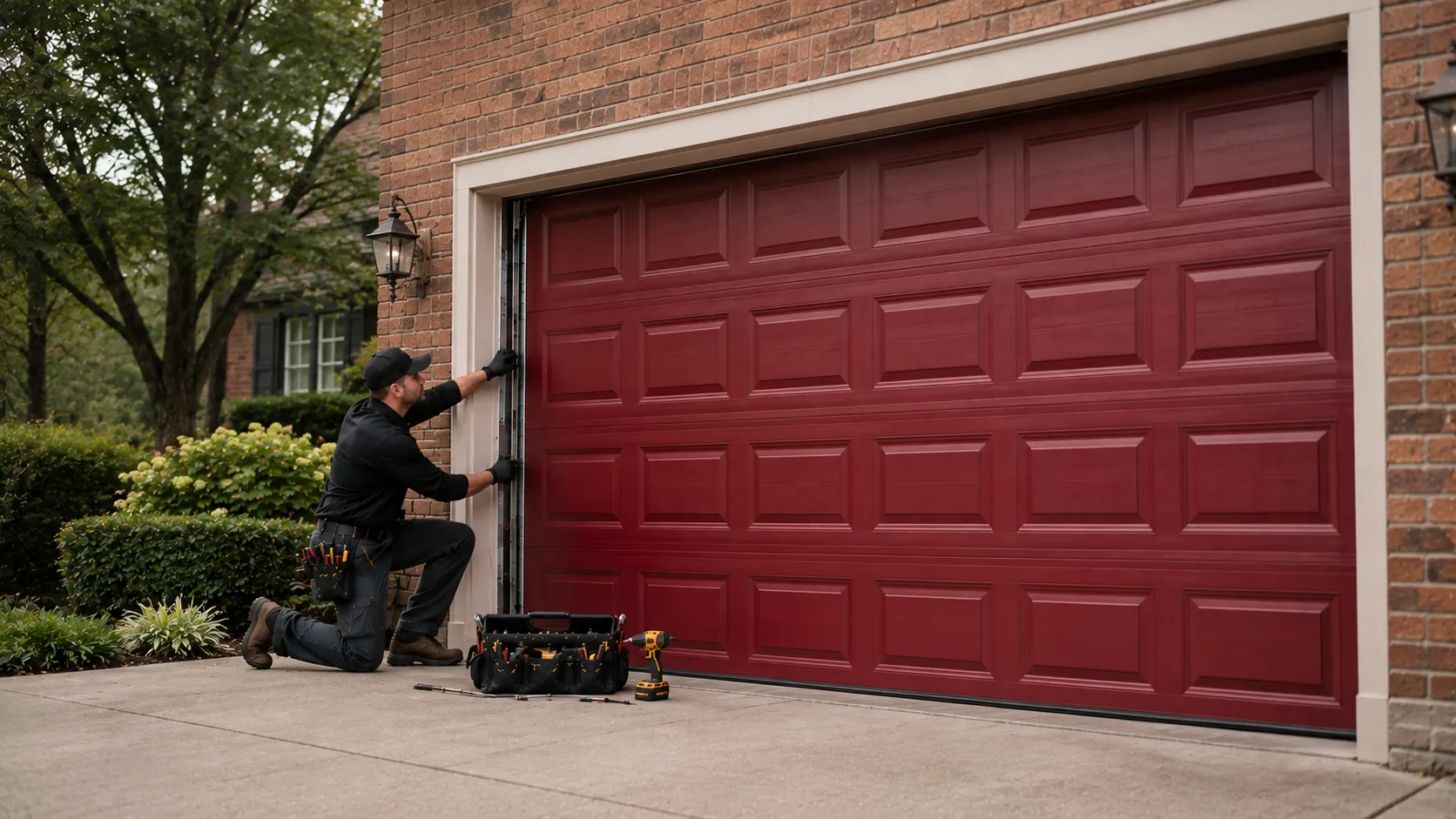
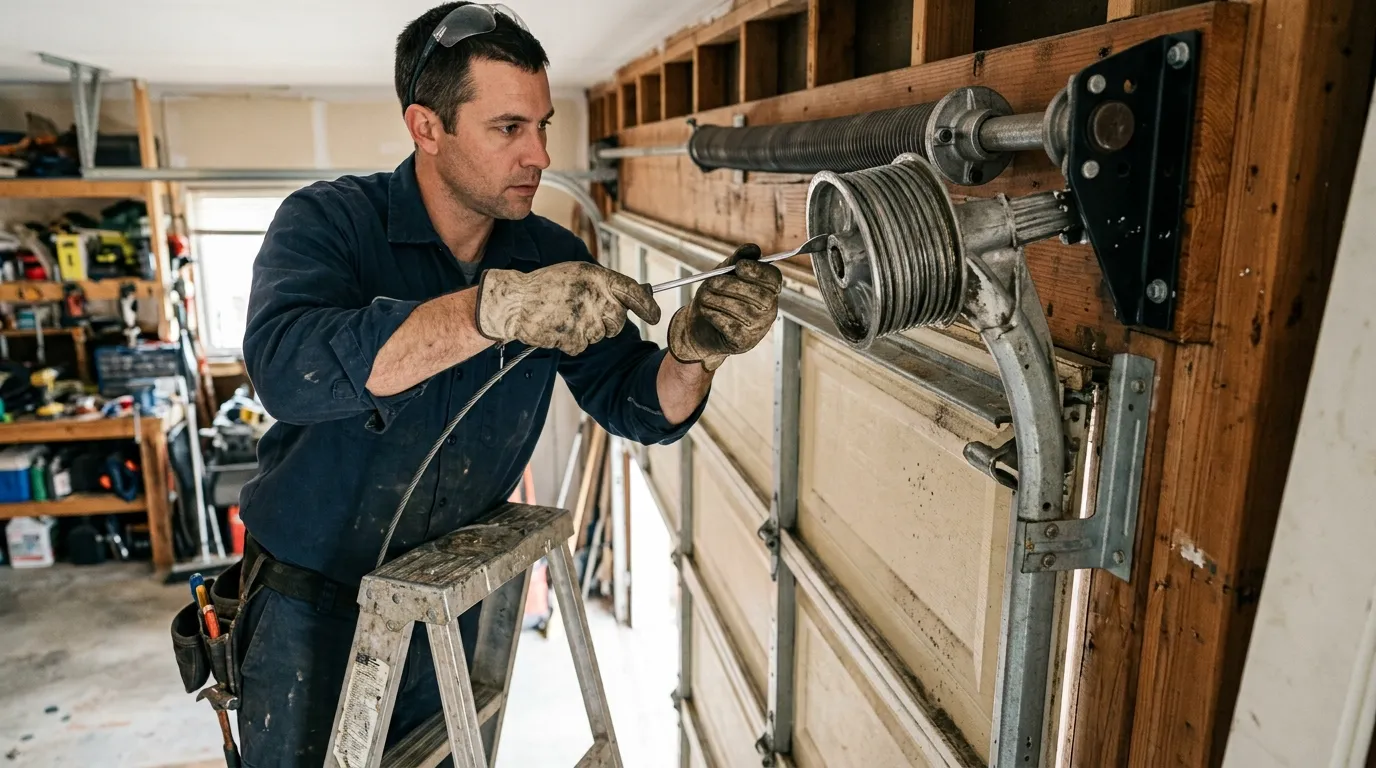
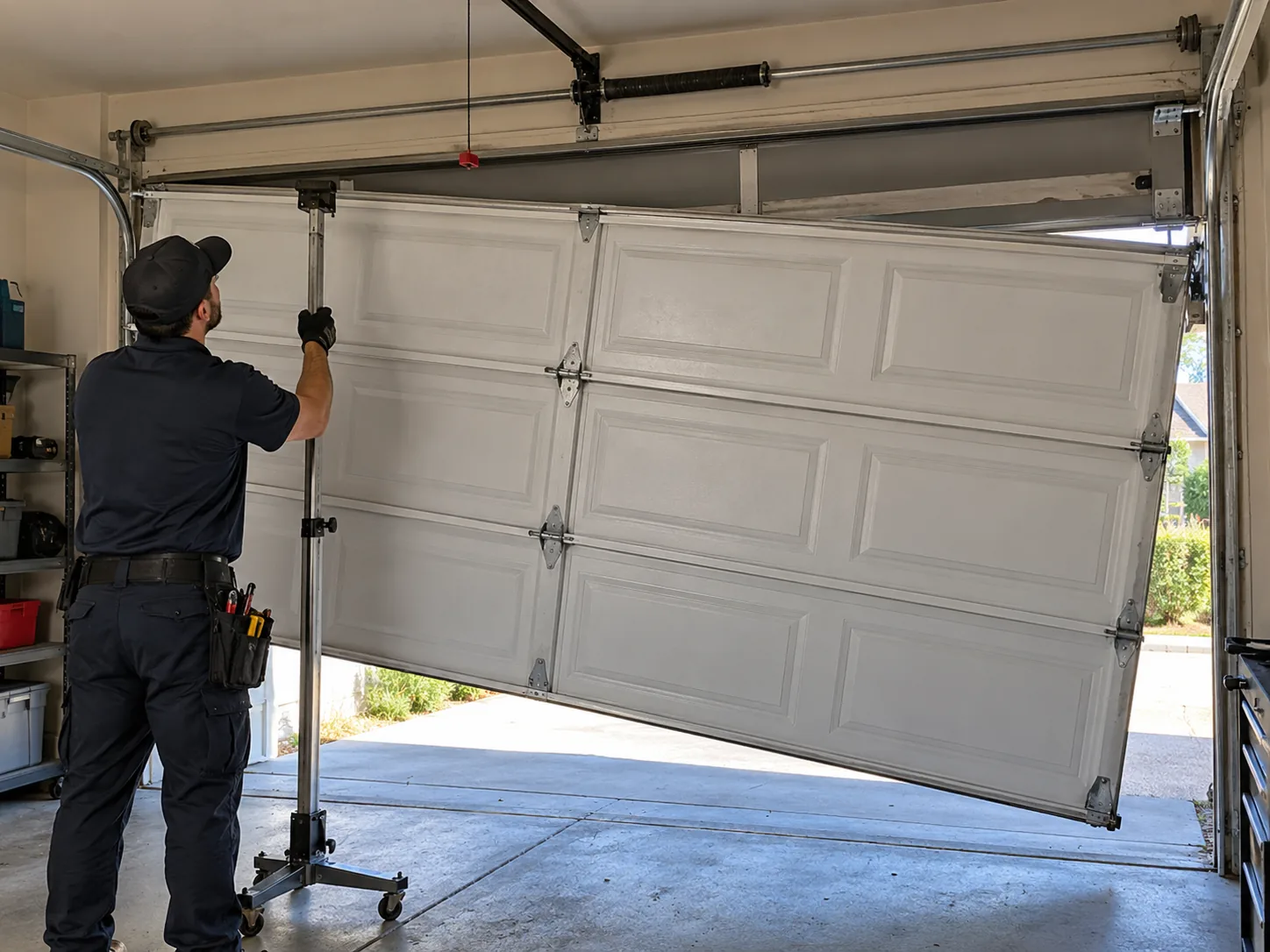
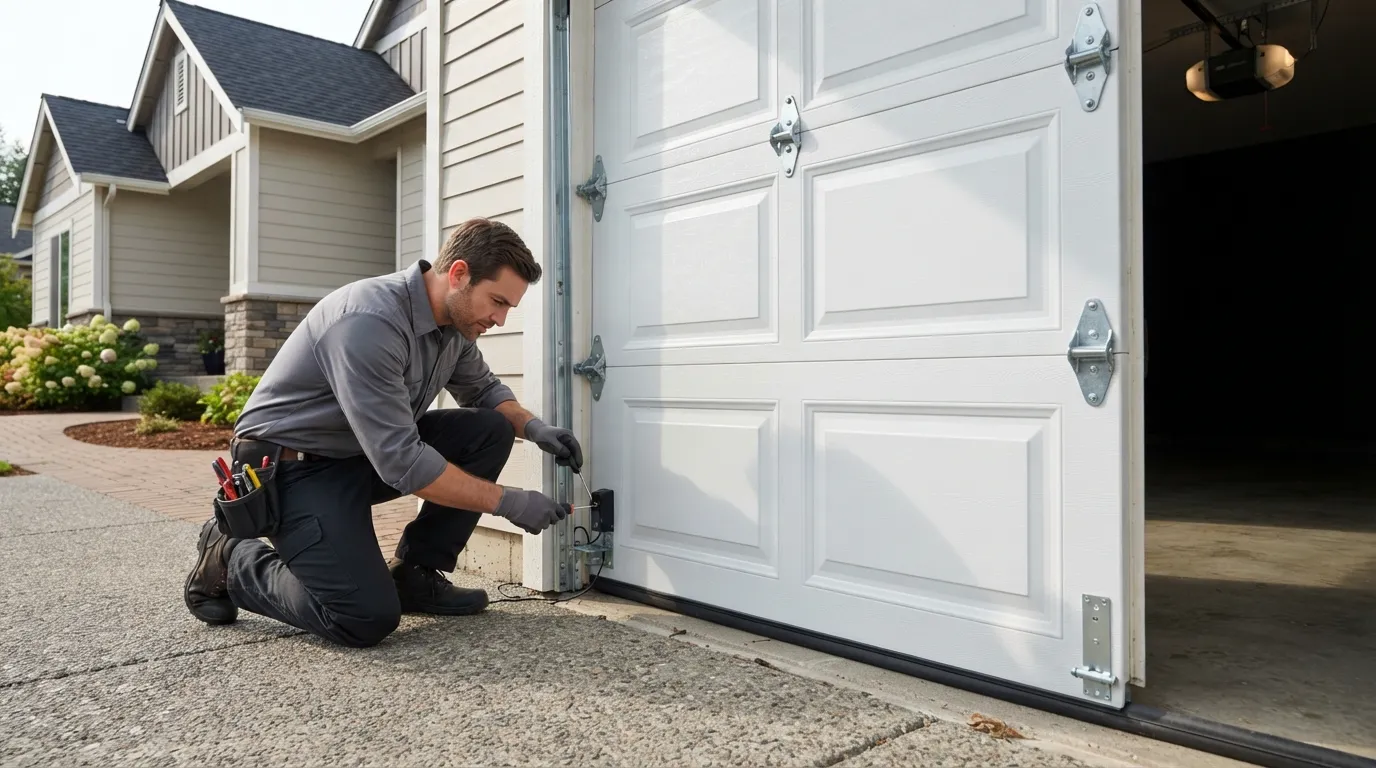
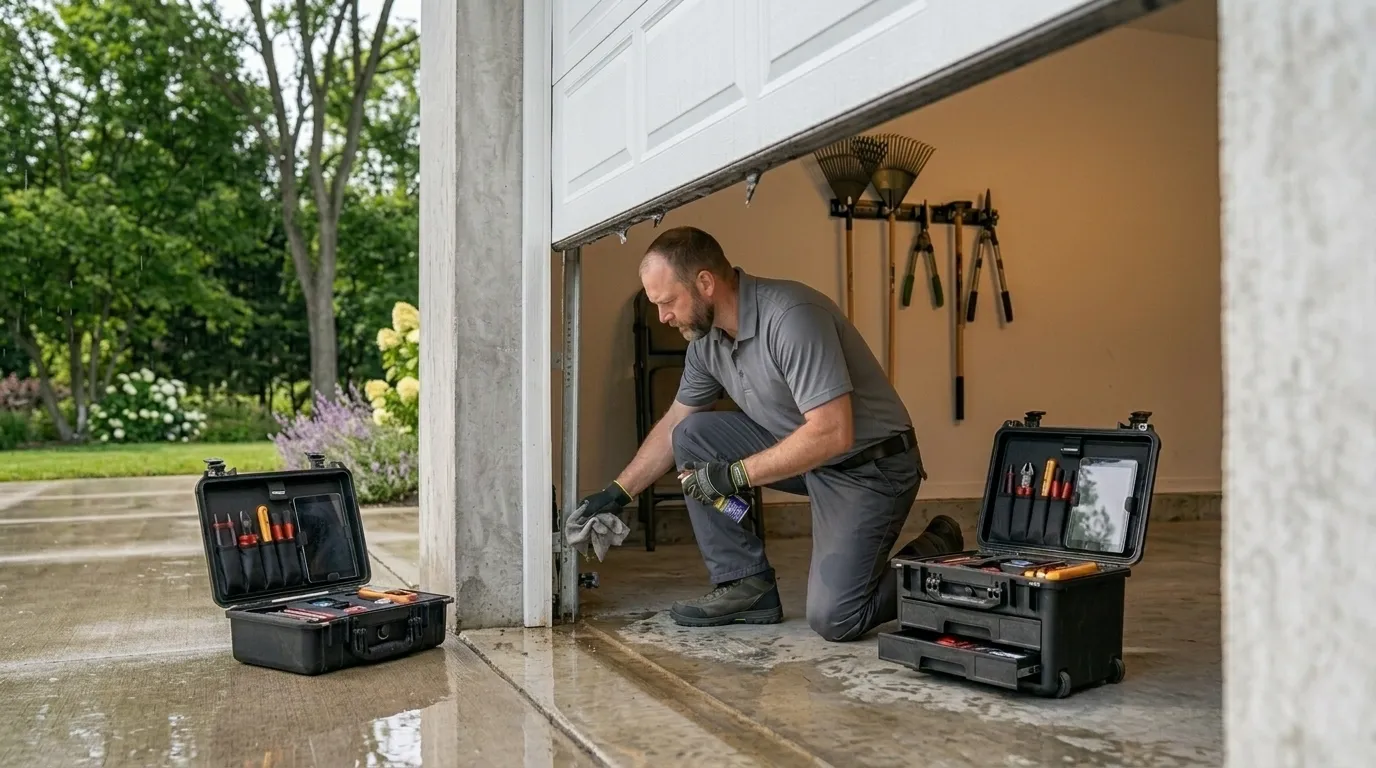
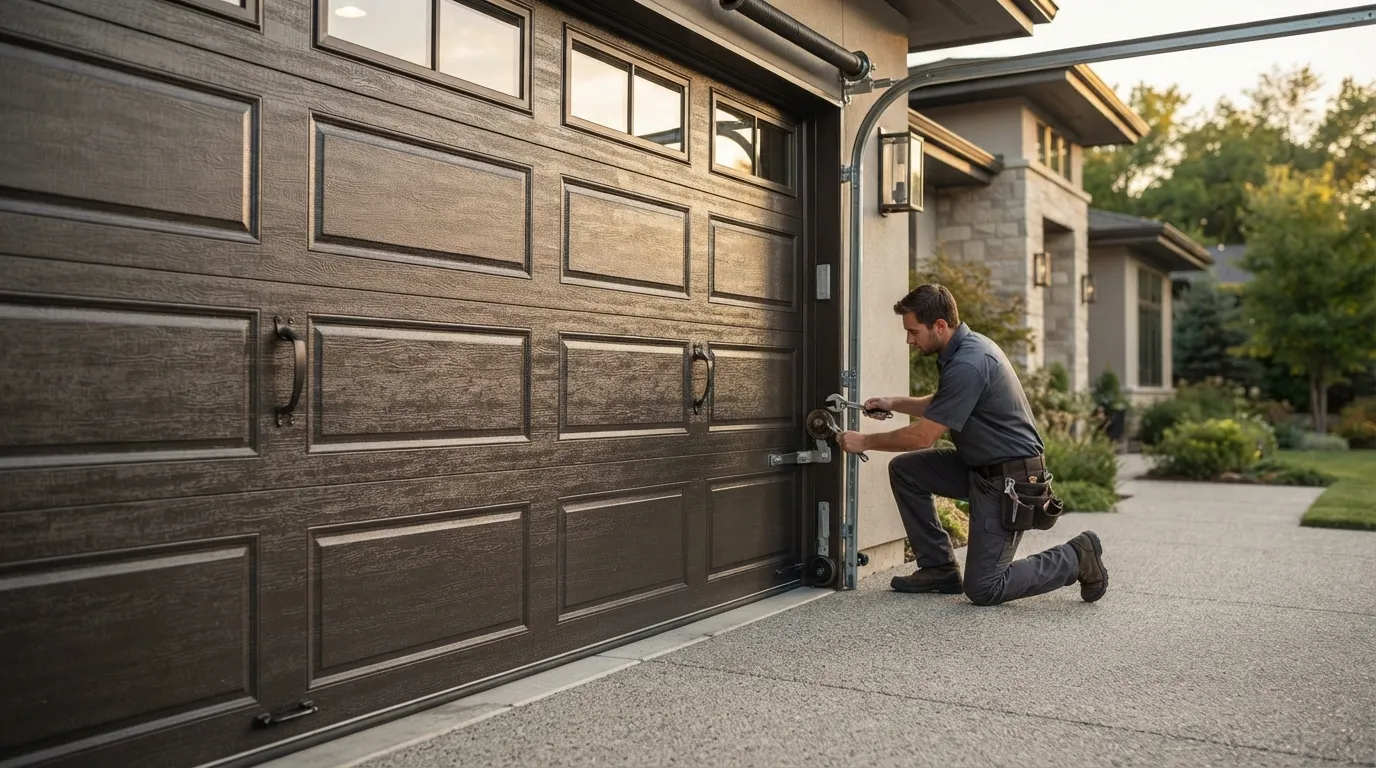
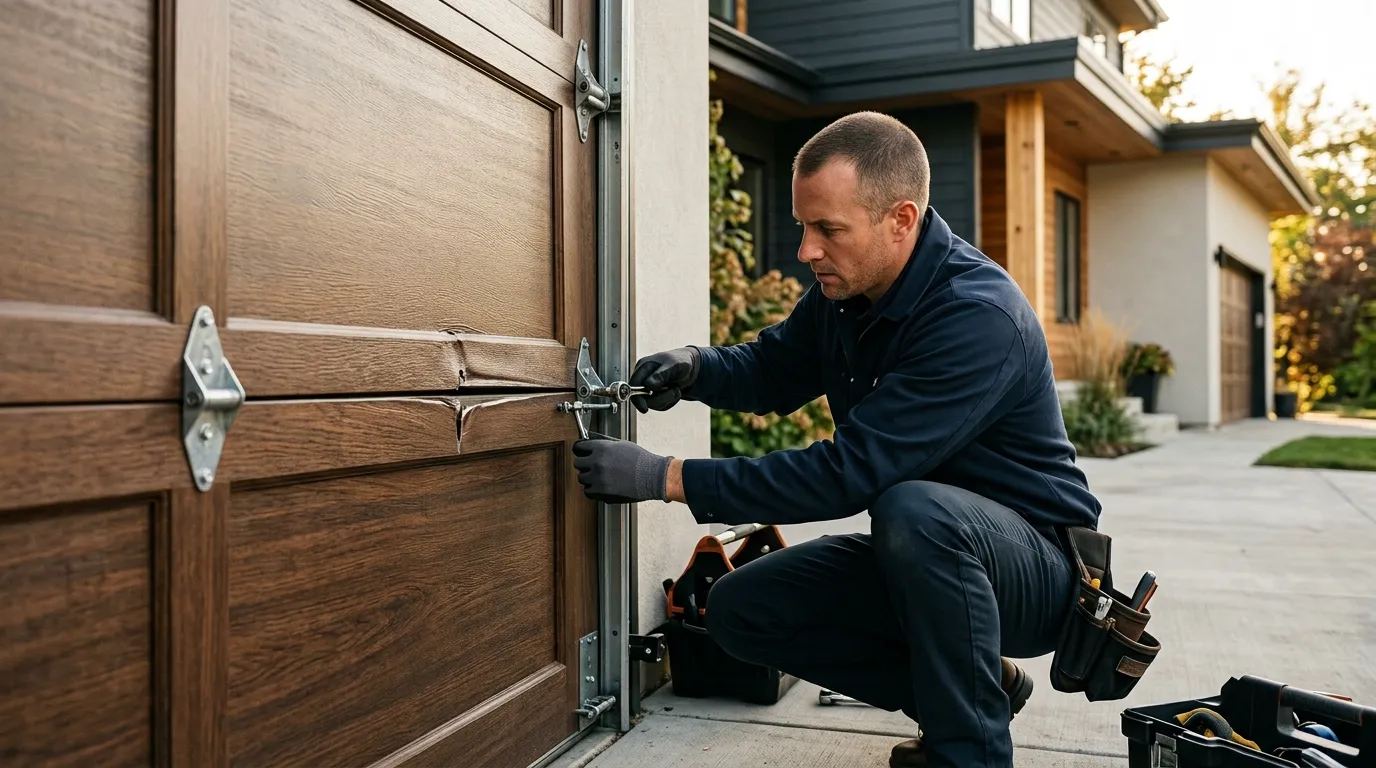
In Drexel Heights, the calls we get about aging doors follow a pattern tied to the housing stock and the climate both. With a severe heat load hitting the same vinyl weatherstrip and nylon rollers for three-plus decades, the failure we see most isn't a snapped spring - it's a track that's binding because the rollers have dried out and gone brittle, or a bottom seal that's shrunk and cracked so the door doesn't seat flush anymore. Owners usually notice it as a door that groans on the way up, or one that used to run quiet and now catches partway. Because most of these houses share a build era, once we've worked a few doors on a block, the fix on the next one down the street tends to look familiar - same track gauge, same spring size, same opener bracket. That's useful for us and it keeps parts costs predictable for you. It also means that when a door has gone past patching - cracked panels, a bent track that won't true up, an opener original to the house - full replacement is usually the more honest answer than another round of repair.