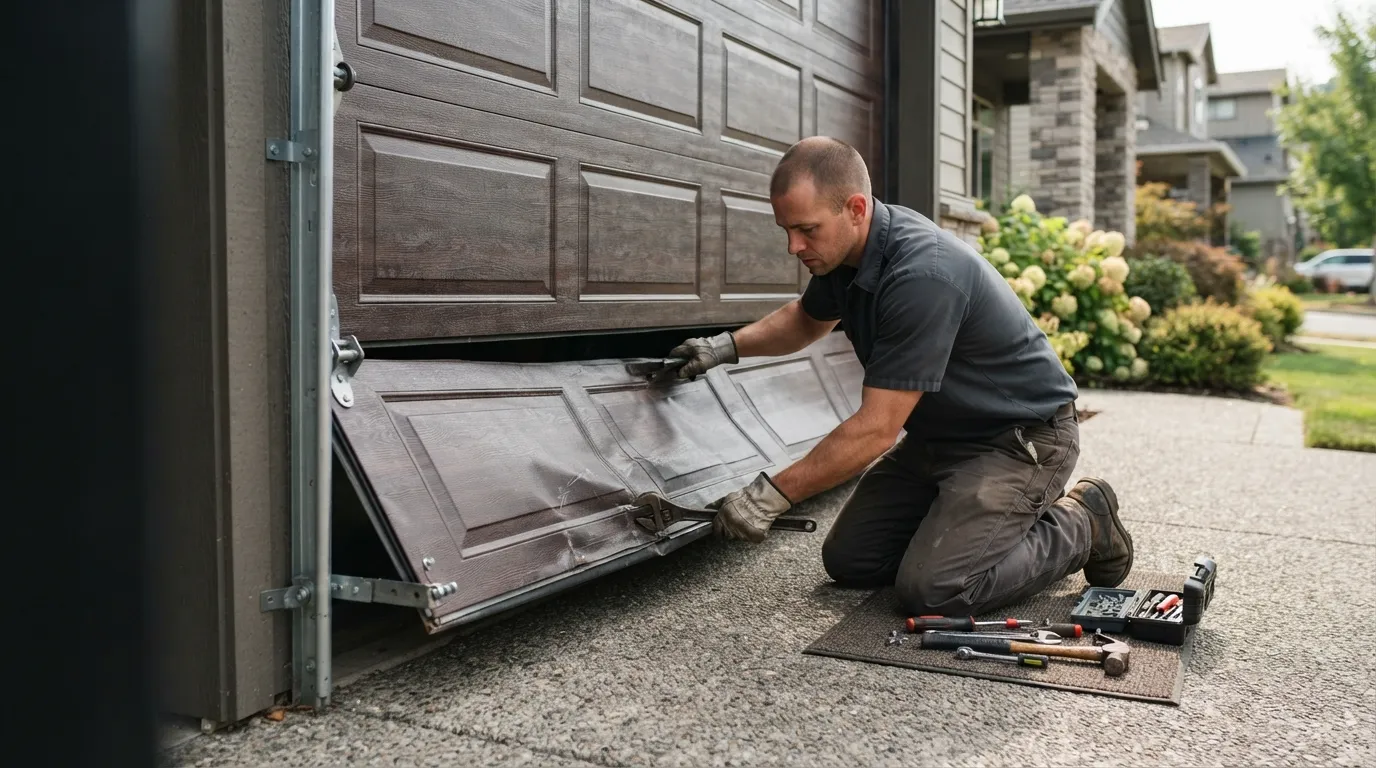
Garage Door Repair for Sahuarita's Mid-2000s Homes in Tucson

Sahuarita, Tucson

Garage Door Repair for Sahuarita's Mid-2000s Homes

Sahuarita's homes mostly date to the mid-2000s, so the failures we see are springs and opener boards hitting end of life together. Same-day diagnosis, no depot markup.

Serving Tucson, AZBackground-checked techsHonest, upfront pricingFast local response

Pricing

What It Costs

We don't quote a price over the phone for Sahuarita calls, because a stuck door can mean three different jobs: a spring, a board, or a track that's been fighting a misaligned opener for months.

Inventory versus sourcing

What we can tell you is what drives the number once a tech is standing in front of the door: whether the part is something carried on the truck or something that has to be ordered, and whether the opener itself is worth saving.

Cohort failure advantage

Because most houses in this part of the service area were built around 2006, a lot of what's failing right now is original equipment reaching the end of its rated life at the same time as the neighbor's.

Legacy part sourcing

That's actually good news for cost predictability - we're not guessing at a door from three different decades, we're seeing the same handful of failure points over and over. The honest limitation: if the opener is a discontinued board from a builder-grade unit, sourcing it can add a day, and at that point replacing the opener is usually cheaper than chasing the part.

DIY or pro

Doing It Yourself

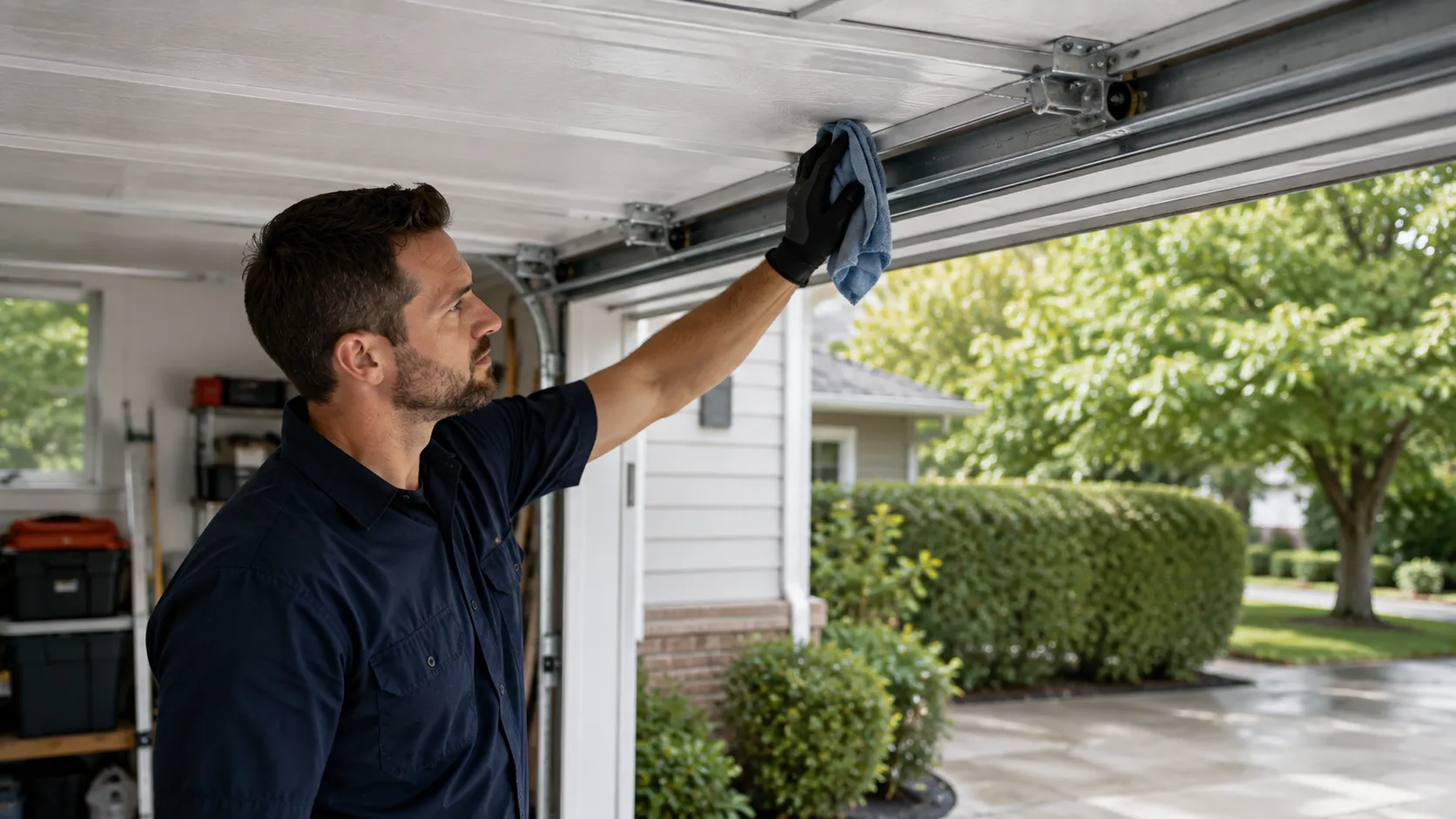
There's a real split between what's safe to check yourself and what isn't. Photo-eye sensors - the two small boxes near the bottom of the tracks - get knocked out of alignment easily, especially after a heat cycle has warped mounting brackets slightly, and you can usually fix that alignment yourself with a level and a screwdriver.

Accessible maintenance

Same with lubricating rollers and hinges; that's maintenance, not repair. What you should not touch is the torsion spring above the door, or the cables running down either side of it.

Spring winding tension

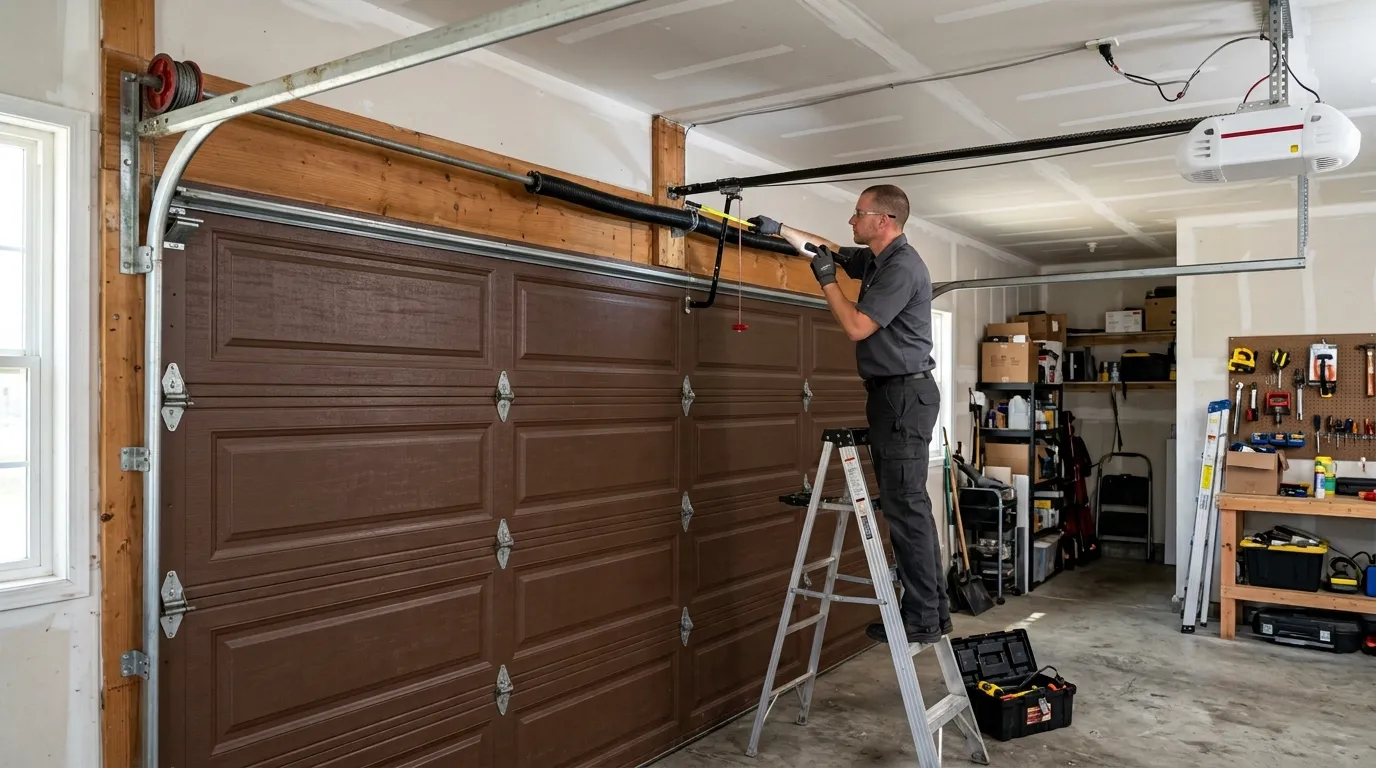
On a door built in the mid-2000s, that spring is wound to a tension that can break a wrist or worse if it lets go while you're working on it.

Spring failure protocol

If the door won't open, or opens partway and stops, or the spring itself looks stretched or has a visible gap in the coil, that's a call, not a project. We'd rather tell you that up front than have you find out the hard way.

Warning signs

How It Shows Up

With a median build year around 2006, the doors in this part of the service area are now old enough that original torsion springs are aging out - most residential springs are rated for a set number of open-close cycles, and a door that's been used daily for close to two decades is running low on that count.

Spring failure sudden onset

So the first sign is often a door that suddenly won't lift, or that an opener strains and reverses instead of raising it. The second pattern is opener electronics.

Heat-caused electronics

Builder-installed openers from that era used circuit boards that weren't built for Tucson-area summer heat, and after years of attic-level temperatures cycling through the housing, boards fail, remotes stop syncing, or the opener runs the motor but the door doesn't move because the drive gear inside has stripped.

Symptom ambiguity

Both patterns show up as "the door stopped working" from the homeowner's side, but they're different jobs, and a tech can usually tell which one it is within a few minutes of looking at the unit.

Booking

Booking a Visit

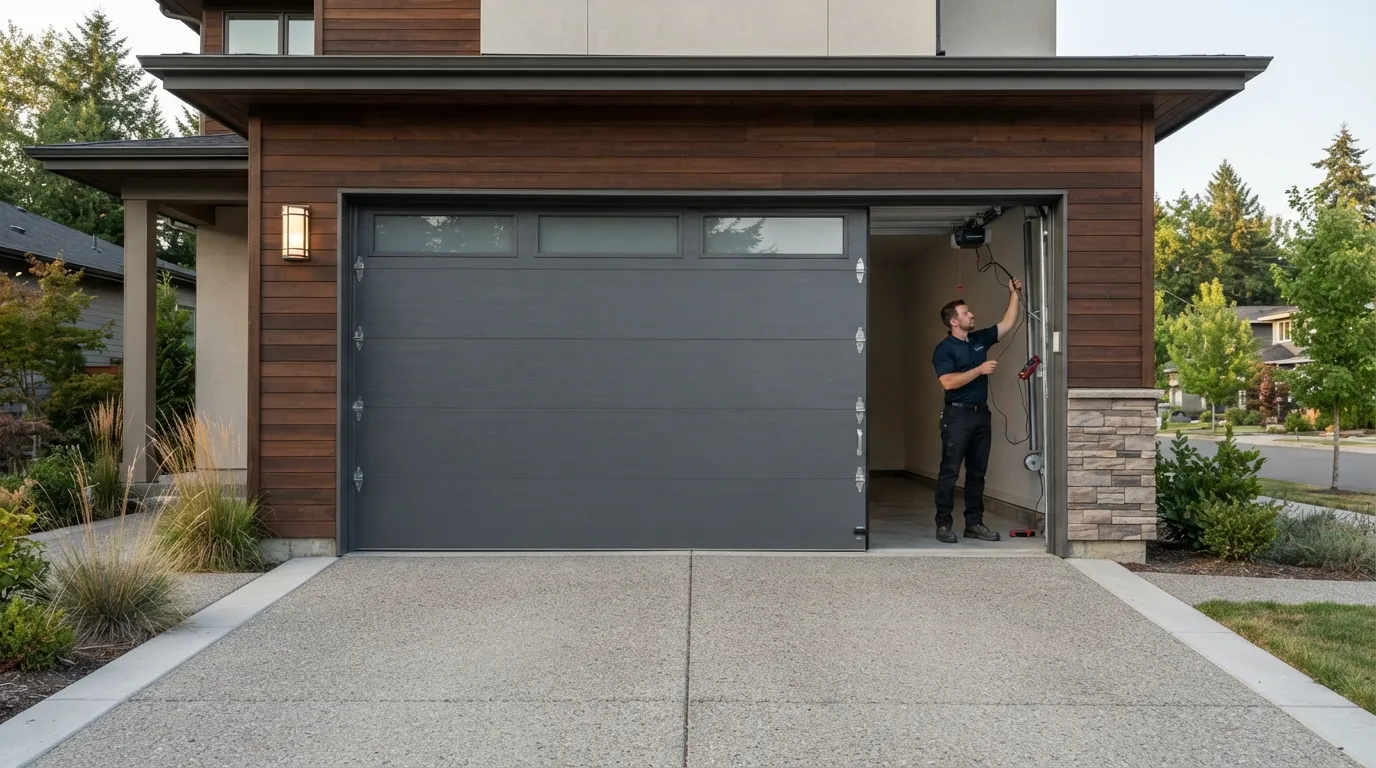
We run this call from Tucson, about 16 miles out, so there's no local branch or drop-in counter in Sahuarita - a technician loads the van with the parts a diagnosis over the phone suggests are likely, based on what you describe, and drives out. That's a real tradeoff worth naming: if the actual problem turns out to be something less common than a spring or a standard opener board, there's a chance the part isn't on the truck and has to be ordered.

What helps on the call: the age of the door if you know it, whether it's the opener or the door itself that's stuck, and whether you hear a motor running when you hit the remote. That's usually enough to narrow down which of the common mid-2000s failures you're looking at before anyone gets in the truck.

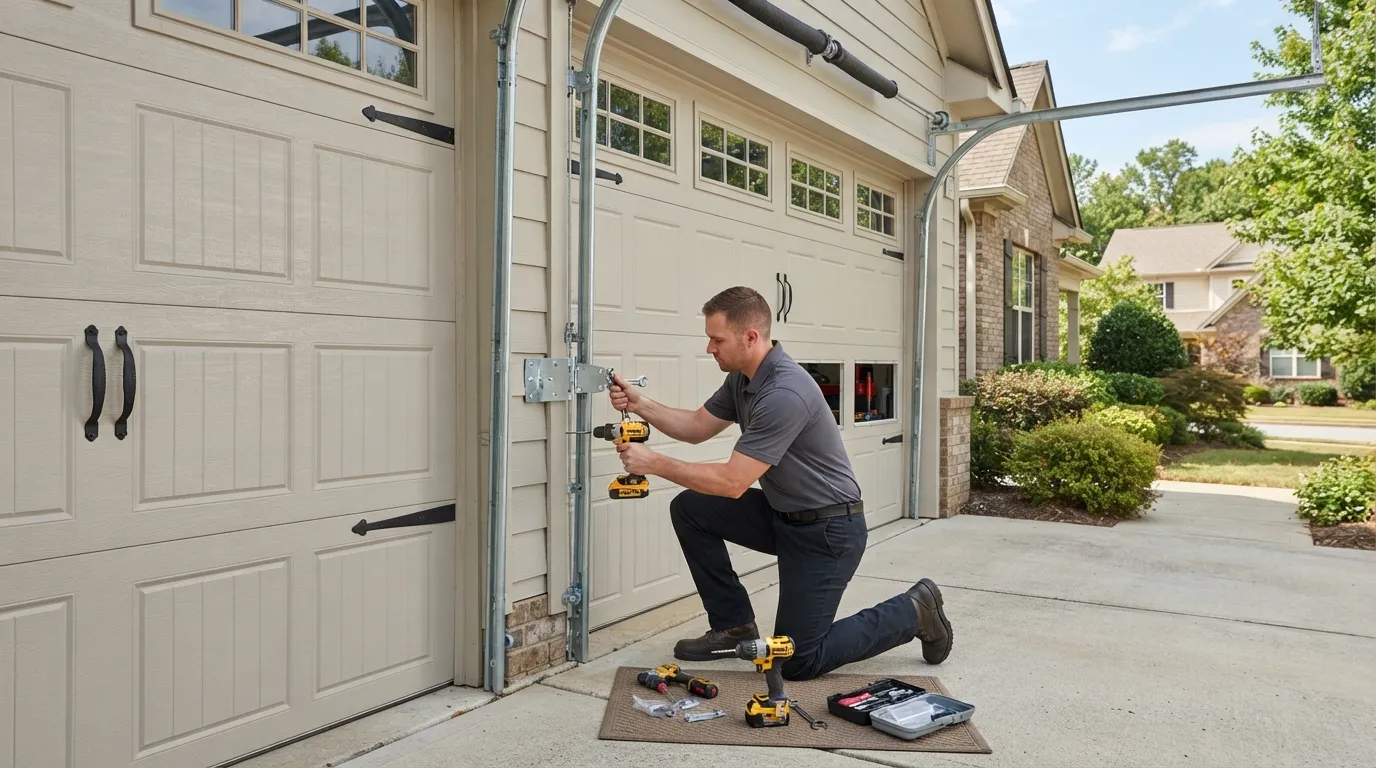
Booking a Visit

Watch-outs

What Can Go Wrong

The short list, in the order we see it here: torsion springs at end of cycle life, opener circuit boards degraded by years of attic heat, stripped drive gears inside the opener housing, and nylon rollers or plastic idler bearings that were standard equipment on doors built in this era and don't hold up well after two decades of severe Tucson-area summer heat.

Drum fraying after spring work

Less common, but real: cables fraying where they wrap the drum, especially on doors that have had a spring replaced once already without the cable getting checked at the same time.

Dragging rollers bend track

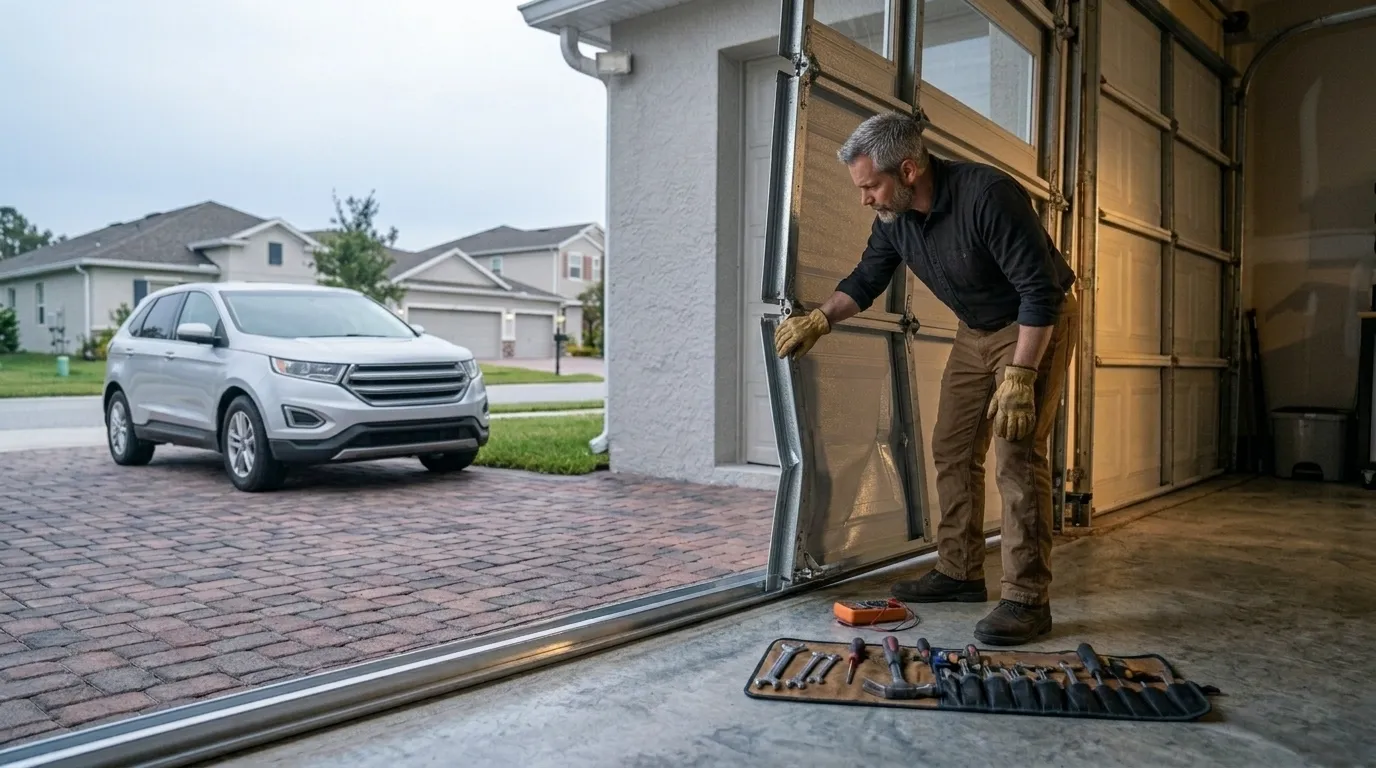
And on a handful of homes, the track itself has bent slightly from a door that's been dragging on a bad roller for longer than it should have.

Mechanical wear dominates

What doesn't usually go wrong here yet, compared to older housing stock: the wood-panel rot and rusted-through track issues you see in houses from the 1960s and 70s. This stock is newer, and most of the trouble is mechanical wear and heat-driven electronics failure, not structural decay.

What the Repair Takes

The repair

What the Repair Takes

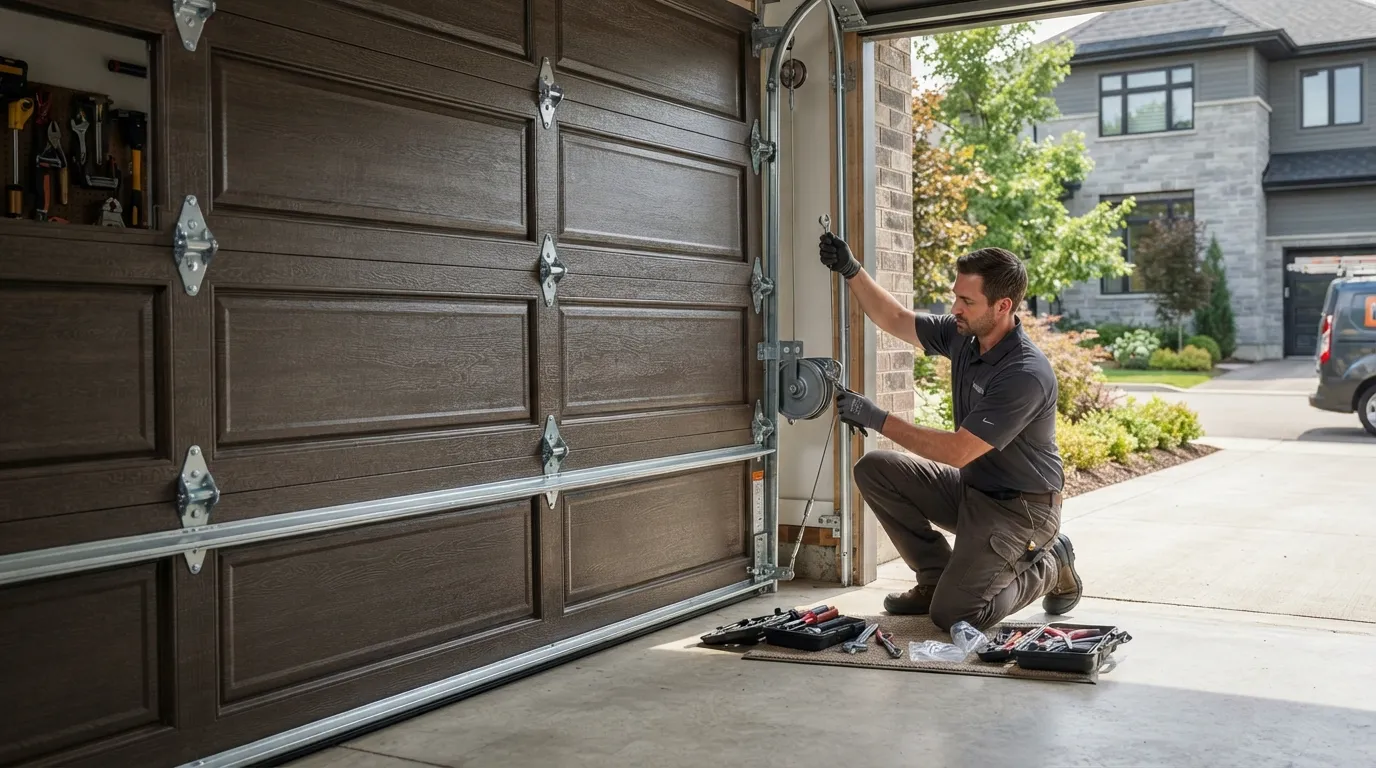
A spring replacement on a standard double door usually means unwinding and removing the old spring, matching the new one to the door's weight and cycle rating, and testing the balance before the tech leaves - that part's straightforward once the tech is on site with the right spring on the truck. An opener board swap is quicker if the board is a common one we stock, slower if it's a discontinued builder-grade unit that has to be ordered.

The honest limitation: we're not going to keep patching a nineteen-year-old opener with a second or third board replacement. Past a certain point, especially with income levels in this area supporting it, most owners choose to replace the unit outright rather than nurse the old one along, and we'll say so plainly if that's where your job is headed. We're not going to sell you a part that's going to fail again in a year.

Questions

Common questions

Why are so many doors in Sahuarita failing around the same time?

Most of the housing here went up around 2006, so a lot of the original torsion springs and opener boards installed at construction are hitting the end of their rated life within a similar window. It's less about bad luck and more about a whole area's housing stock aging in sync.

Do you have a branch in Sahuarita?

No. We run out of Tucson, about 16 miles away, and a technician drives out with parts loaded based on what you describe over the phone. There's no local counter or drop-in location here.

Is it worth replacing an opener instead of repairing it?

If the opener is close to two decades old and on its second board failure, replacement usually makes more sense than a third repair. We'll tell you straight if that's the situation rather than keep billing you for patches on a unit near the end of its life.

Can heat really damage a garage door opener?

Yes. Attic temperatures during Tucson-area summers put real stress on circuit boards and plastic components, and openers installed in the mid-2000s weren't built with today's heat-tolerant parts. That's a common failure point in this area's housing stock specifically.

Ready when you are

Need a garage door sorted in Tucson?

Tucson Garage Door Pros repairs and installs garage doors, springs and openers in Tucson, AZ and the surrounding area.

Call Now(520) 277-5762