
Recent construction advantage
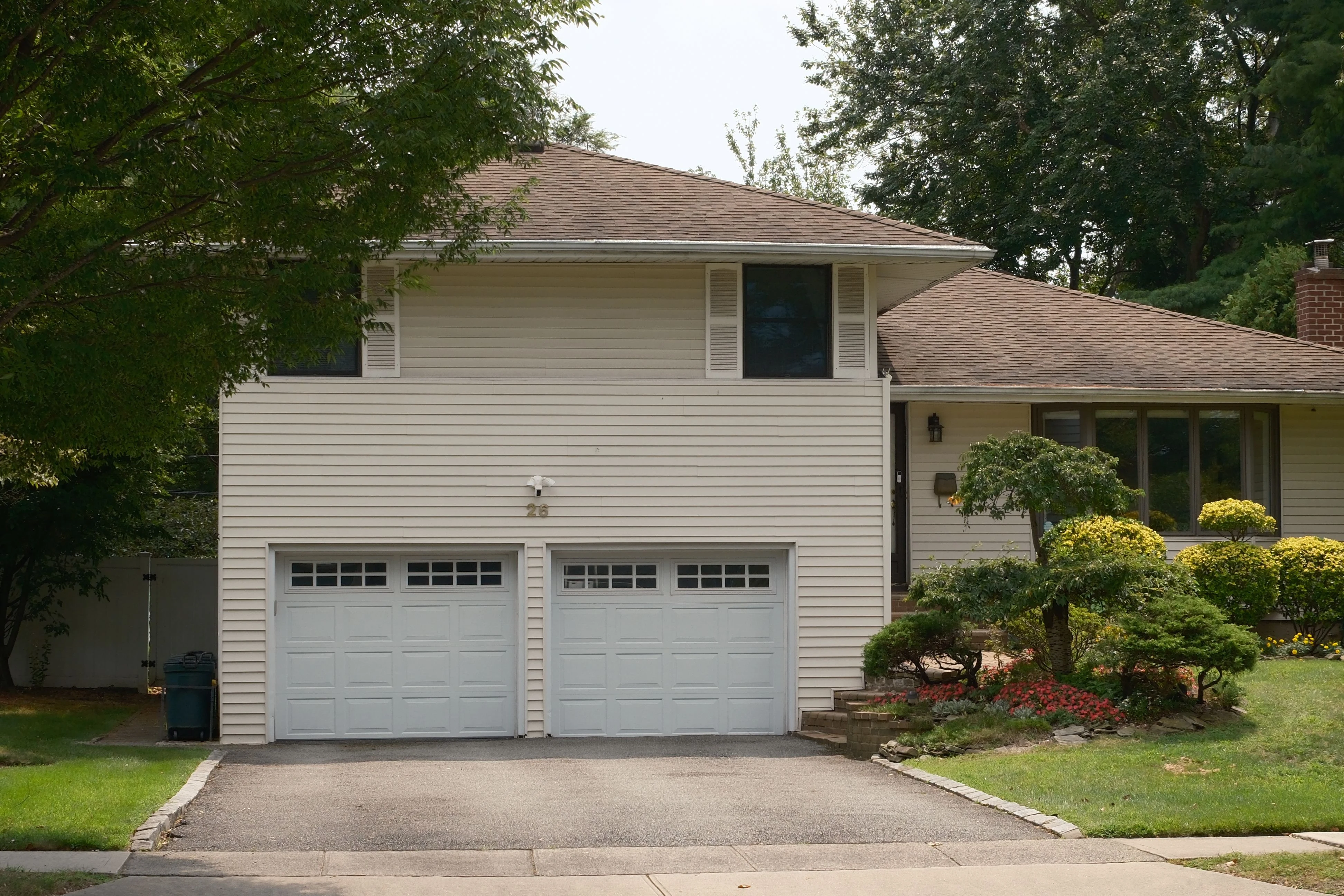
Vail runs later - median build year here is 2007, which puts a big share of these houses right at the edge of that window or past it.
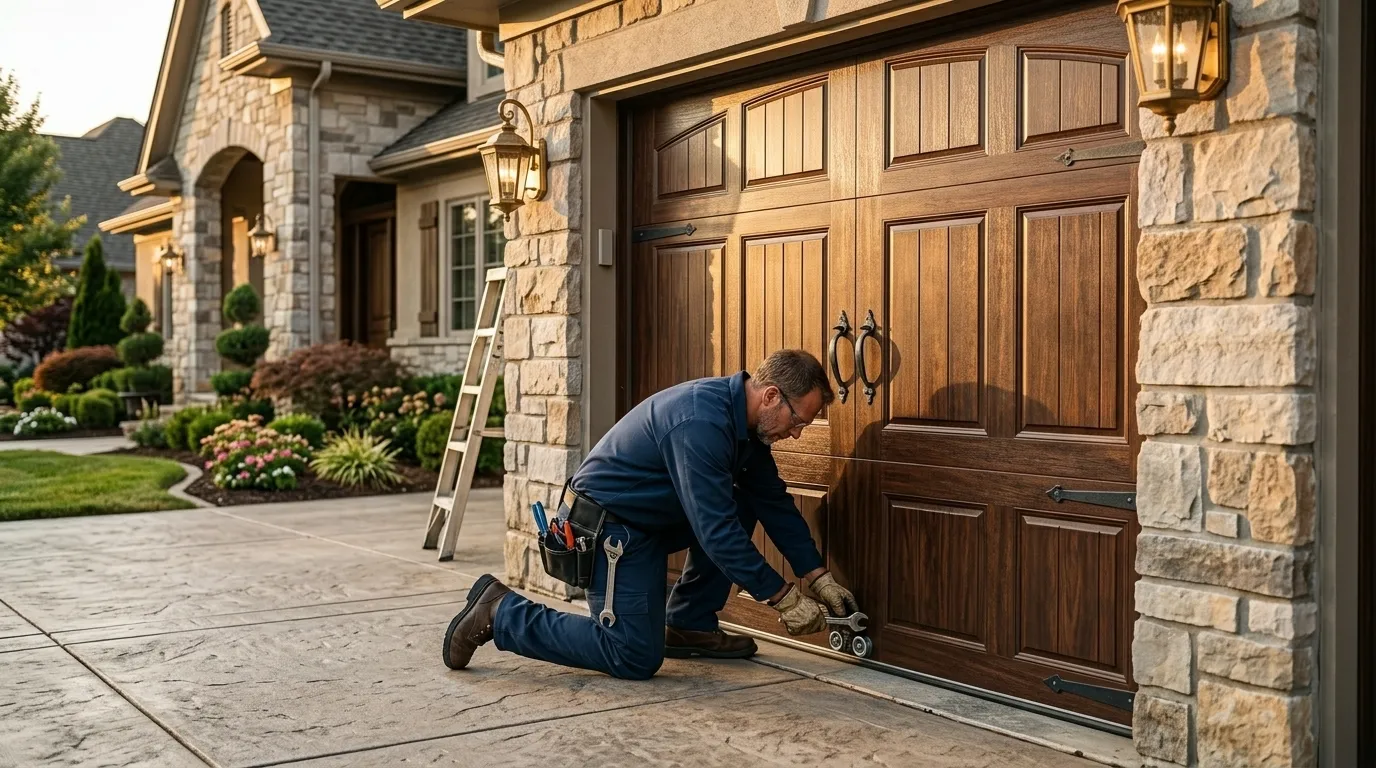
Vail, Tucson
Vail homes mostly went up after 2007, well past Tucson's 1980-2007 build window - that newer hardware fails off-track in different ways. Here's what we see and fix.
Watch-outs
Most of the rest of the Tucson area we work in was built between 1980 and 2007, with a lot of stock from the 1980s and 90s.
Vail runs later - median build year here is 2007, which puts a big share of these houses right at the edge of that window or past it.
That matters for off-track doors because newer construction generally means factory-installed extension or torsion systems built to current spec, wider door openings for two- and three-car garages, and rollers and brackets that haven't had twenty extra years to work loose.
When a door in Vail comes off track, it's less often the slow bracket-walk you see on an older 1980s door and more often a single hard event: a roller jumping the track after a cable let go, or a bottom bracket bending because the door caught something on the way down. The track itself is usually still true - it's the fasteners or the roller that gave first.
Warning signs
The door binds on one side and stalls a few inches into the cycle, or it comes down crooked with one bottom corner lower than the other.
Sometimes you get a door that lifts fine but drags a wheel out of the vertical section near the top, which on a newer, wider two-car door puts a lot more leverage on that one point than it would on a narrower older door.
If a cable snapped, the door will drop hard and sit unevenly at the bottom, and you should not try to force it back up - that's the fastest way to bend a track that's otherwise fine.
On these newer builds, the panels themselves are usually steel and hold their shape well, so what looks like a bent panel is often just a roller that's pulled the panel out of alignment at one hinge point.
Local causes
Vail's summer heat is the same severe heat band that covers the whole service area, and it does the same thing to newer doors it does to older ones: it dries out lubrication on rollers and hinges faster than in milder climates, and that dry roller is what jumps a track under load. Because Vail sits about 14 miles out from Tucson, and because household income here runs higher at $121,385 against the wider area's $90,758, we see more two- and three-car doors and heavier insulated panels - both put more stress on the roller-and-track connection than a single narrow door does. With 5,339 households in Vail, we're not out here every day the way we might be in a denser part of town, so when a bracket or roller does fail, it tends to have been building for a while before anyone calls.
On the truck
We carry the rollers, cables, and standard track brackets that fit the sectional steel doors common on newer builds, and we bring those out from Tucson on the truck for the job rather than keeping a branch in Vail. Where the repair calls for a part specific to a less common opener or panel size - which shows up more on custom or higher-end installs, and Vail has its share given the income levels here - that can mean a short order wait rather than a same-visit fix. We'll tell you straight if that's the case before we start, not after.
The repair
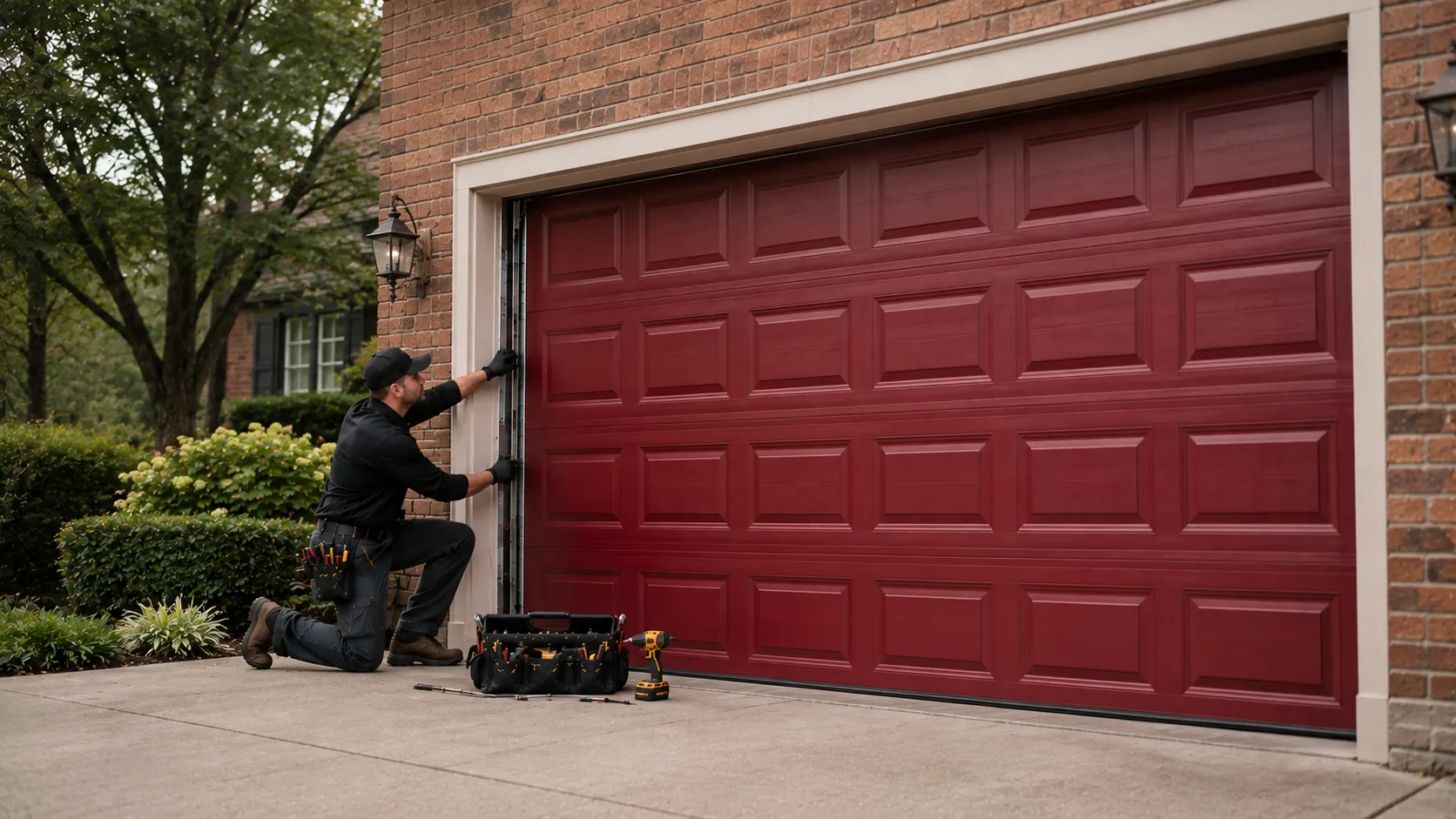
Most off-track jobs on a door this age are a re-track and re-hang: we get the door back on its wheels, check the track for any bend at the point of failure, replace the roller or bracket that gave out, and run the door through a full cycle to check balance.
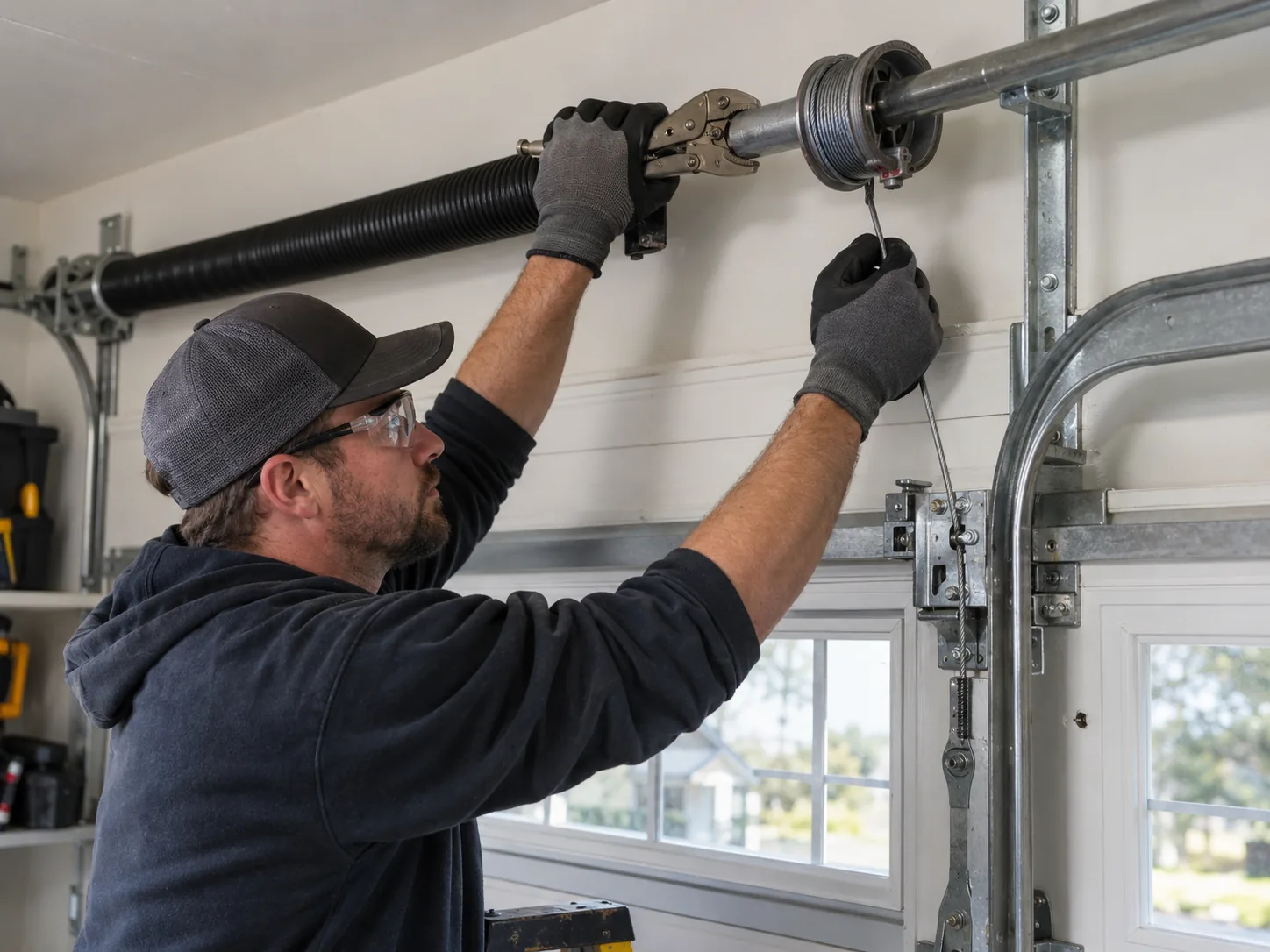
If a cable snapped, that's a cable replacement alongside the re-track, done under control with the door secured - not something to attempt with the door hanging on one side.
On a wider two-car door, we also check both tracks even if only one side jumped, since the load that pulled one roller off can put uneven strain on the other.
If the opener has been fighting the door while it was off track, we check the travel limits afterward so it doesn't grind against a stop that's now in the wrong place.
Questions
Age of the house isn't the main driver here - it's heat drying out lubrication on rollers, plus the wider two- and three-car doors common in newer Vail builds putting more load on the roller-and-track connection. A cable failure or a bent bracket from an impact causes most of what we see, not worn-out original hardware.
Don't. A door that's off track is under spring tension even if it looks slack, and forcing it can bend the track further or drop the door on someone. Leave it where it stopped and call it in.
No, we run out of Tucson and bring parts on the truck for each job. Standard rollers, cables, and brackets are covered same visit; a less common part for a custom door or opener may need a short order wait.
Yes. Vail sits in the same severe-heat band as the rest of the area we cover, and that heat dries lubrication on rollers and hinges faster than in a milder climate, which is a common trigger for a roller jumping the track under load.
Explore more
Ready when you are
Tucson Garage Door Pros repairs and installs garage doors, springs and openers in Tucson, AZ and the surrounding area.