
Dent and delamination
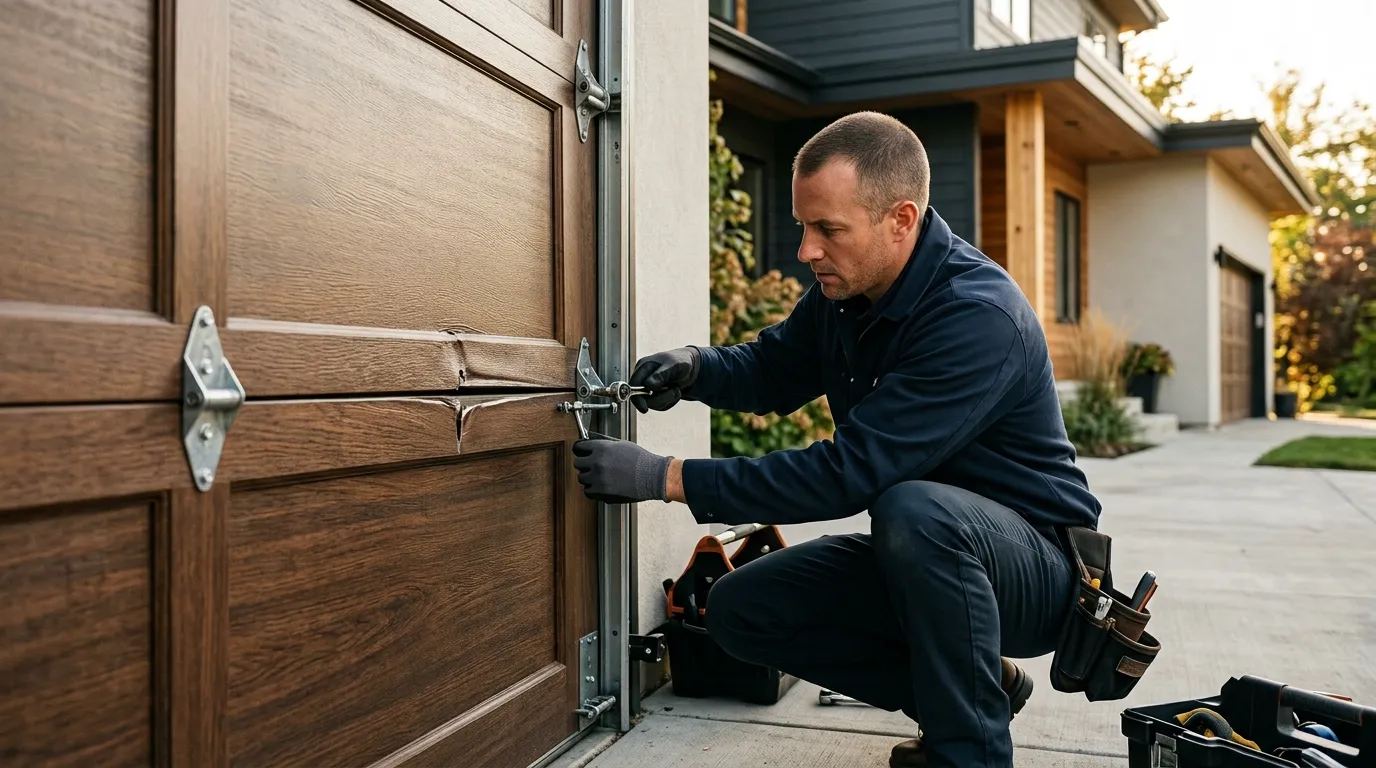
Those newer skins dent easier under a stray bumper tap and they delaminate at the seams when the foam bond breaks down. The second failure mode is UV and heat fatigue on the panel's outer coat.
Vail, Tucson
Vail's garage doors are newer than most of Tucson's, built after 2000 with lighter steel skins. Here's what actually cracks, dents, or delaminates on them.
Watch-outs
Most panel failures we see on this side of the service area aren't the same ones you'd expect on an older Tucson door. Vail's housing stock is younger - median build year 2007, a good two decades past the 1986 median for the wider Tucson area - so you're mostly dealing with steel skins over a foam core, not the older solid wood or heavier gauge panels from the 1980s.
Those newer skins dent easier under a stray bumper tap and they delaminate at the seams when the foam bond breaks down. The second failure mode is UV and heat fatigue on the panel's outer coat.
In a severe-heat climate band, a south or west-facing door takes a beating every summer - the paint chalks, the foam expands and contracts against the steel, and eventually a seam opens up or a panel bows.
On a door this age, one bad panel is usually a clean swap, not a full-door problem, because the sections and hardware are recent enough to still be a stock match.
Warning signs
You'll usually notice a visible dent or a crease first, often at bumper height on the bottom panel. Sometimes it's less obvious: a section that looks fine from the driveway but flexes or pops when the door runs, which usually means the foam-to-steel bond let go on the inside.
On newer builds like most of what's around Vail, we also see hairline cracks along a panel's bottom edge where the weatherstrip channel sits - thin steel, and years of heat cycling makes it brittle right at that seam. If a single panel is warped, the door can bind in the track even when the opener and springs are fine, which some owners mistake for a spring or opener problem when it's really just the one bad section pulling the whole door out of square.
Local causes
The build year matters more than people think. Doors put up new since 2000 tend to be lighter-gauge steel with thinner insulation than the heavier doors common on 1980s Tucson stock, and lighter steel dents and cracks more readily under the same impact. Combine that with a severe-heat climate band and you get faster foam breakdown and paint failure on any south or west-facing door, which is common on Vail's newer subdivisions where garages often face the street directly.
We also see this from basic wear: a basketball, a bike pedal, a trailer tongue backed in too fast. None of that is unique to Vail, but the newer steel here shows the damage faster than the older, heavier panels you'll find closer into town.
On the truck
Because most Vail doors date to the 2000s rather than the 1980s or 90s, we can usually match a single damaged panel from stock sizes without having to special-order an obsolete profile.
That's the upside of a newer build year - the section widths and panel styles are common ones, not the discontinued profiles you run into on an older door. What we don't stock is every color and wood-grain laminate finish.
If your door has a specific factory finish, that panel may need to be ordered, and we'll tell you upfront if that's the case rather than mismatch a color to save a trip.
The repair
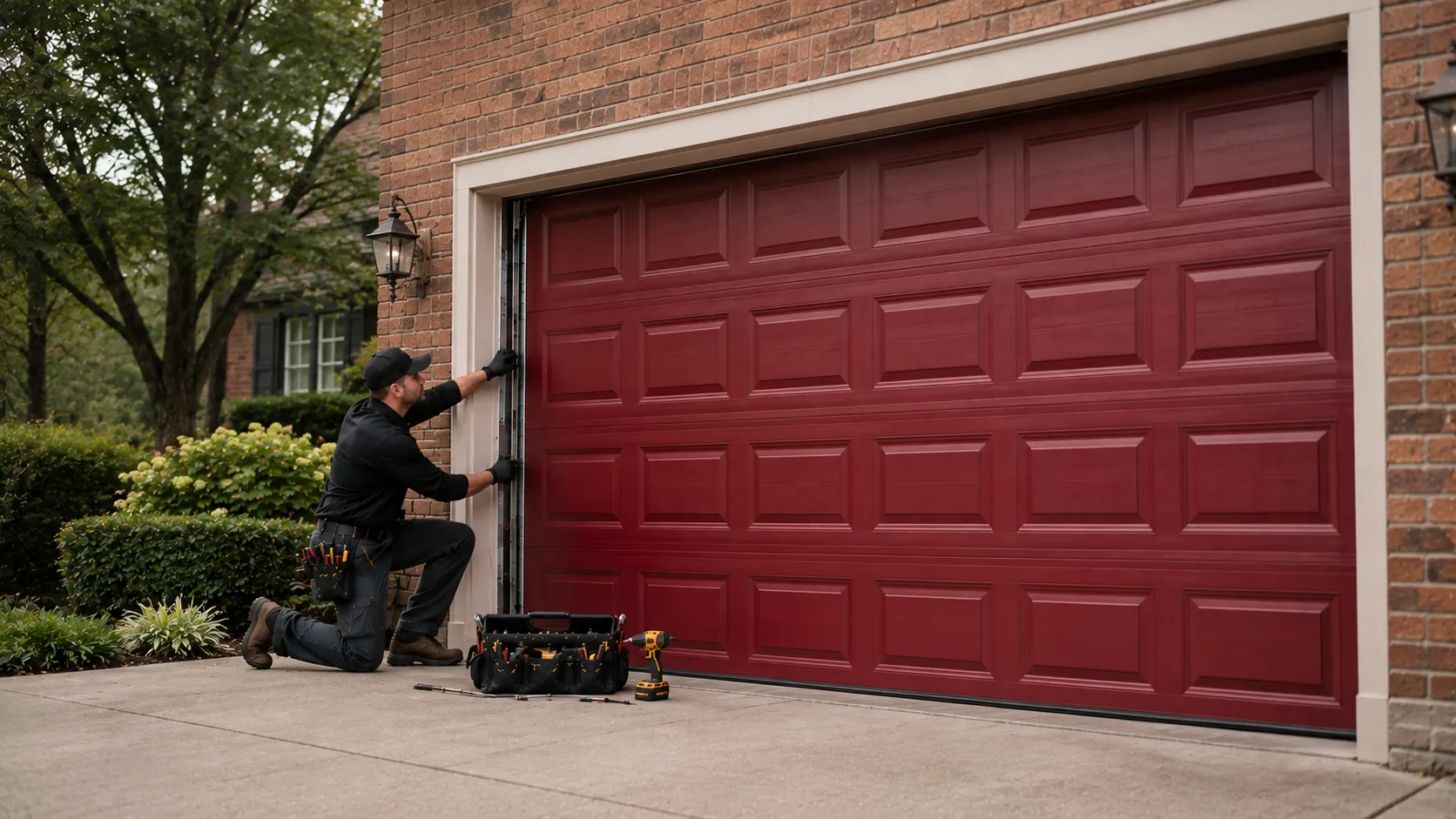
A single-panel swap on a door this age is usually a same-visit job once the part is in hand - unbolt the damaged section, transfer over the hinges and rollers, bolt in the replacement, and check the door runs square in the track. If more than one panel on the same side shows dents or cracking, that's usually heat and impact fatigue working across the whole door, and at that point full-door replacement can cost less over time than chasing panel after panel.
We travel out from Tucson for this work, about 14 miles from the shop, so we book the visit rather than run a same-day dispatch - plan for a scheduled appointment, not a drive-by call.
Questions
Probably not. Median build year in Vail is around 2007, which means most doors here use panel sizes and steel gauges still in common production. Parts availability is generally better here than on the older 1980s stock closer to central Tucson.
That's usually heat cycling on thinner steel. Vail sits in a severe-heat climate band, and the newer, lighter-gauge panels common on post-2000 builds flex more under repeated expansion and contraction than the heavier older panels, which eventually cracks the seam near the weatherstrip channel.
Often yes if it's a standard factory finish, since your door's build era generally uses common stock colors and profiles. Specialty finishes or wood-grain laminates sometimes need to be special-ordered, and we'll confirm that before starting the job.
No, we run out of Tucson, about 14 miles away. We schedule Vail jobs as appointments rather than same-day walk-up calls, so plan on booking ahead rather than expecting an immediate dispatch.
Explore more
Ready when you are
Tucson Garage Door Pros repairs and installs garage doors, springs and openers in Tucson, AZ and the surrounding area.